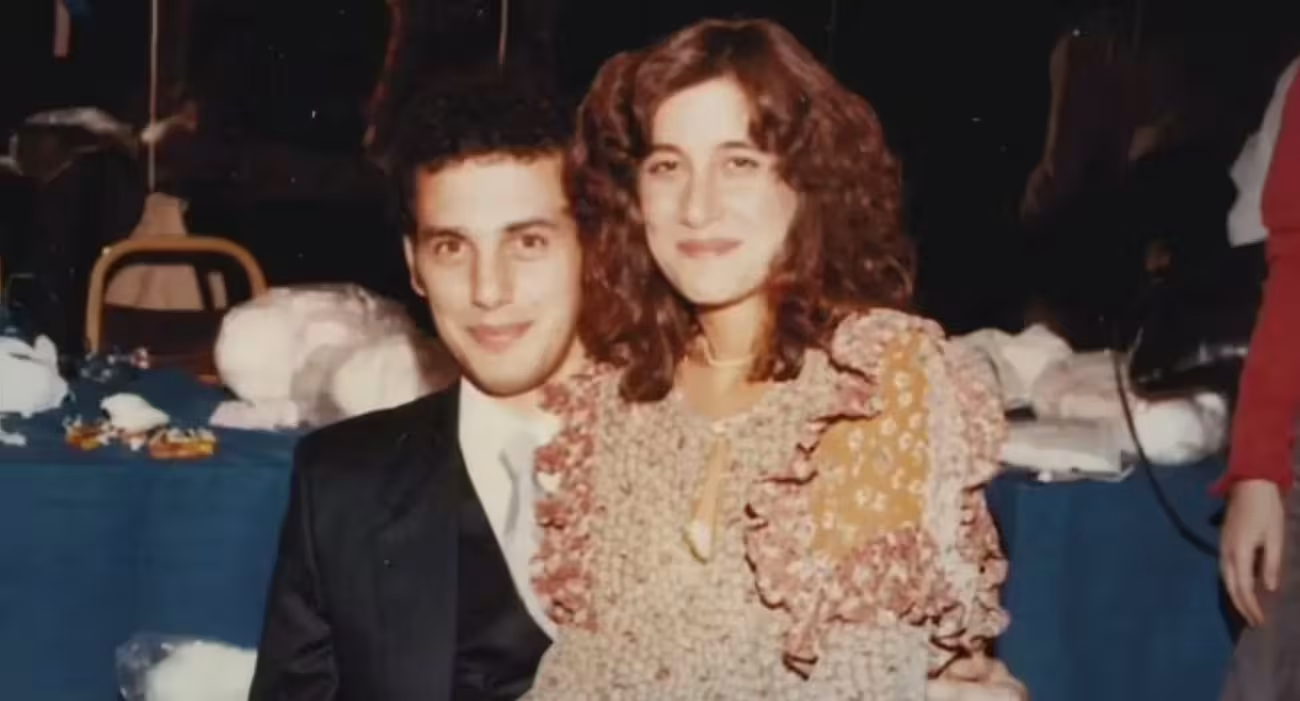
Robert Bierenbaum, a former plastic surgeon and licensed pilot, was convicted of murdering his first wife, Gail Katz Bierenbaum, who disappeared from their Manhattan apartment on July 7, 1985. For 15 years, he maintained that Gail had left their home following an argument and never returned. In October 2000, a New York jury convicted him of second-degree murder despite the absence of her body or a direct eyewitness to the killing.
The case attracted national attention because prosecutors argued that Bierenbaum had transported Gail's remains to a New Jersey airport and disposed of them from a small airplane over the Atlantic Ocean. Flight records, inconsistencies in his statements, testimony about earlier domestic violence and evidence of the couple's deteriorating marriage formed the foundation of the prosecution's case.
In December 2020, Bierenbaum admitted during a parole hearing that he had strangled Gail and disposed of her body from an airplane. His confession, publicly reported in October 2021, confirmed the central elements of a murder theory that investigators had pursued for decades.
The case also involved Gail's younger sister, Alayne Katz, who became an advocate for domestic violence victims, and Janet Challot, a Las Vegas gynecologist who married Bierenbaum in 1996 while the investigation into his first wife's disappearance remained unresolved.
Who Is Robert Bierenbaum?
Robert Bierenbaum is a former American plastic surgeon who was convicted of murdering his wife, Gail Katz Bierenbaum, in New York City in 1985.
Born in 1955, Bierenbaum pursued a medical career and worked as a surgical resident at Maimonides Medical Center in Brooklyn during the period surrounding Gail's disappearance.
He was also a licensed pilot who regularly rented small aircraft. His experience as a surgeon and pilot became central to the prosecution's theory that he could have transported and disposed of Gail's body without assistance.
Following her disappearance, Bierenbaum continued his medical career, moved away from New York and eventually established a new family.
He was convicted of second-degree murder in October 2000 and sentenced to 20 years to life in prison. His conviction was subsequently upheld on appeal.
Who Was Gail Katz Bierenbaum?
Gail Katz Bierenbaum was a 29-year-old graduate student studying clinical psychology when she disappeared on July 7, 1985.
She married Robert Bierenbaum in August 1982, and the couple lived in an apartment on East 85th Street on Manhattan's Upper East Side.
According to trial testimony, Gail's marriage became increasingly troubled by arguments, controlling behavior and threats.
Friends and relatives testified that she had considered leaving her husband and was making preparations to establish a separate residence.
Shortly before her disappearance, Gail had discussed divorce with people close to her. She had also been looking at apartment advertisements and had borrowed money in preparation for leaving the marriage.
These circumstances became important evidence when prosecutors sought to establish what happened on the day she vanished.
The Troubled Marriage and Earlier Domestic Violence
The deterioration of Gail and Robert Bierenbaum's marriage was a central part of the prosecution's case.
Witnesses described frequent disputes and incidents that caused concern about Gail's safety.
One particularly serious incident occurred in the autumn of 1983, when Bierenbaum choked Gail until she lost consciousness.
During the murder trial, prosecutors introduced evidence of the incident, including statements Gail made to a relative shortly afterward.
The defense challenged the admission of some testimony about the couple's relationship, but the appellate court ultimately upheld the conviction.
The Psychiatrist's Warning Letter
Another significant piece of evidence involved a letter written by Bierenbaum's psychiatrist warning Gail about the danger her husband might pose.
The letter became part of the prosecution's presentation of the couple's troubled relationship.
According to the appellate court's account, Gail intended to use the letter during negotiations surrounding the possible dissolution of the marriage.
The existence and admission of the letter were contested during subsequent legal proceedings.
The case demonstrated how documented warnings and earlier acts of violence can become important evidence when investigators later examine a death or disappearance involving intimate partners.
July 7, 1985: The Day Gail Katz Disappeared
Gail disappeared on Sunday, July 7, 1985, from the Manhattan apartment she shared with Bierenbaum.
Bierenbaum told investigators that the couple had argued that morning and that Gail left the apartment around 11 a.m. to spend time in Central Park.
He claimed she had not returned before he traveled to New Jersey for a family gathering.
However, investigators later discovered that his account omitted a significant activity.
On the same afternoon, Bierenbaum rented and flew a small airplane from an airport in New Jersey.
The Cessna 172 Flight
Flight records established that Bierenbaum rented a Cessna 172 from Caldwell Airport in Fairfield, New Jersey, at approximately 4:30 p.m.
He returned the aircraft one hour and 56 minutes later.
According to the appellate court, the flight duration was sufficient for a round trip over the Atlantic Ocean.
The airport's layout also made it possible for someone to load items into the aircraft without being observed directly from the rental office.
Investigators eventually concluded that the aircraft could have been used to transport and dispose of Gail's remains.
His Statements to Family Members
At approximately 6:30 p.m., Bierenbaum arrived alone at his sister's home in Montclair, New Jersey, for a family birthday celebration.
He told relatives that he had argued with Gail and that she had not returned after leaving the apartment.
He did not disclose that he had rented an airplane and flown for nearly two hours that afternoon.
He also repeated his account of Gail's disappearance to friends.
Delayed Police Report
Bierenbaum did not formally report Gail missing until approximately 9 p.m. on July 8, more than a day after she supposedly disappeared.
During police interviews, he repeatedly claimed that he had remained in his Manhattan apartment until approximately 5:30 p.m. on July 7.
That statement was inconsistent with the documented airplane rental beginning at 4:30 p.m. in New Jersey.
Investigators considered these inconsistencies important because they contradicted his account of his movements on the day Gail disappeared.
How Investigators Discovered the Airplane Evidence
The early investigation faced serious difficulties because Gail's body had not been recovered and investigators lacked direct forensic evidence of a homicide.
In September 1986, investigator Hope Martin was assigned to examine the disappearance.
Martin learned that Bierenbaum was a licensed pilot and investigated whether he had flown an aircraft on July 7, 1985.
On October 17, 1986, she confirmed that he had rented an airplane from Mac Dan Aircraft Rental at Caldwell Airport on the day Gail disappeared.
Forensic examinations of the aircraft and vehicles associated with Bierenbaum did not produce evidence conclusively linking them to Gail's remains.
The initial investigation was closed in April 1987 without a murder prosecution.
Nevertheless, the flight records remained an important piece of evidence when investigators later reopened the case.
The 1989 Discovery of Human Remains on Staten Island
In May 1989, a woman's torso was discovered on a Staten Island beach.
Investigators initially believed the remains belonged to Gail after comparing available medical imaging.
For Gail's family, the discovery appeared to provide an answer after several years of uncertainty.
However, that identification was eventually overturned.
When the case was reopened in 1998, the remains were exhumed and examined using DNA technology.
The testing established that the torso did not belong to Gail.
Her body therefore remained missing, and investigators still needed to establish what had happened without physical remains.
Robert Bierenbaum's Life After Gail Disappeared
Despite remaining under suspicion, Bierenbaum continued his medical career after the initial investigation stalled.
He left New York and eventually practiced plastic surgery in Las Vegas.
During this period, he developed relationships with other women, some of whom later provided investigators with information about his behavior and statements concerning Gail.
Stephanie Youngblood's Account
Stephanie Youngblood, a chiropractor who dated Bierenbaum in Las Vegas, later discussed their relationship with ABC News.
She recalled that the relationship initially appeared happy and involved travel, social activities and charitable medical work.
However, she said Bierenbaum later displayed intense anger during several incidents.
Youngblood also said he initially avoided discussing the disappearance of his first wife.
According to her account, a therapist eventually recommended ending the relationship because of concerns about her safety.
She subsequently separated from Bierenbaum.
Her experiences became part of the broader public understanding of his behavior after Gail's disappearance, although her personal account should be distinguished from the evidence directly establishing the 1985 murder.
Who Is Janet Challot, Robert Bierenbaum's Second Wife?
Janet Challot is a physician who married Robert Bierenbaum in 1996, approximately 11 years after Gail Katz disappeared.
According to ABC News, Challot was a gynecologist living in Las Vegas when she married Bierenbaum.
The couple subsequently moved to Minot, North Dakota, where they established a family and had a daughter.
Some internet searches use the spelling Janet Chollet, but the verified ABC News report identifies her as Janet Challot.
Information about Challot's later private life is limited. No reliable evidence establishes her involvement in Gail's murder.
The Couple's Life in North Dakota
In North Dakota, Bierenbaum continued practicing medicine and developed a positive reputation among some members of the local community.
He attracted attention after helping save a child who had been bitten by a tiger at the North Dakota State Fair.
To people who did not know about Gail's disappearance, he appeared to be a successful physician and family man.
His professional reputation contrasted sharply with the unresolved murder investigation in New York.
That contrast became an important element of later media coverage, particularly as investigators gathered evidence from people who had known him in different periods of his life.
How the Gail Katz Murder Investigation Was Reopened
Investigators revisited Gail's disappearance during the late 1990s.
Former Manhattan investigator Andy Rosenzweig helped pursue the case, reviewing earlier evidence and examining Bierenbaum's statements and relationships.
The renewed investigation involved additional witness interviews, a reassessment of the flight records and forensic testing of the remains previously believed to belong to Gail.
Although the DNA results excluded Gail as the source of the Staten Island remains, the investigation developed a stronger circumstantial case.
On December 8, 1999, a grand jury indicted Bierenbaum for second-degree murder.
He was subsequently brought to trial in Manhattan in the autumn of 2000.
The 2000 Murder Trial: Conviction Without a Body
The prosecution faced the challenge of proving that Bierenbaum intentionally killed Gail despite the absence of her body, a murder weapon or a direct eyewitness.
Prosecutors relied on several categories of circumstantial evidence.
Evidence Presented at Trial
- Marital conflict: Testimony established that the couple's marriage was deteriorating and Gail intended to leave.
- Earlier violence: Evidence showed that Bierenbaum had previously choked Gail until she lost consciousness.
- The psychiatrist's warning: Prosecutors presented evidence concerning a letter warning Gail about the danger her husband posed.
- The airplane rental: Records confirmed a nearly two-hour flight on the day of her disappearance.
- Inconsistent statements: Bierenbaum repeatedly failed to disclose the flight while claiming he had remained in Manhattan.
- The altered flight log: Witnesses testified about an entry that appeared to have been changed from July 7 to August 7, 1985.
- Expert testimony: Specialists explained how it would have been physically possible to transport a body and dispose of it from the aircraft.
The Prosecution's Airplane Theory
Prosecutors argued that Bierenbaum killed Gail in their apartment, placed her remains inside a large bag, transported them to the New Jersey airport and discarded them over the Atlantic Ocean.
Expert witnesses testified that the sequence was physically possible within the available time.
The prosecution also presented a demonstration showing how a pilot could operate a Cessna 172 while disposing of a weighted object from the aircraft.
One aspect of the prosecution's theory involved the possibility that Gail's body had been dismembered or otherwise arranged for transport.
Because her remains were never recovered, that particular detail could not be independently established through forensic examination.
The Jury's Verdict
In October 2000, a Manhattan jury convicted Robert Bierenbaum of second-degree murder.
He was sentenced on November 29, 2000, to 20 years to life in prison.
The conviction demonstrated that a murder case can be established through compelling circumstantial evidence even when the victim's body has never been recovered.
Why the Conviction Was Upheld on Appeal
Bierenbaum challenged the verdict, arguing that the evidence was insufficient and that certain testimony and demonstrations should not have been admitted.
On October 22, 2002, the New York Supreme Court's Appellate Division affirmed the conviction.
The court determined that the evidence allowed a rational jury to conclude beyond a reasonable doubt that Bierenbaum intentionally killed Gail and disposed of her remains over the Atlantic Ocean.
Although the appellate judges identified an evidentiary error concerning part of the trial record, they concluded that the error was harmless and did not justify reversing the conviction.
Additional state and federal legal challenges were unsuccessful.
In 2010, the United States Court of Appeals for the Second Circuit rejected his federal habeas corpus challenge.
Robert Bierenbaum's 2020 Confession
For decades after Gail's disappearance, Bierenbaum denied responsibility for her death.
That position changed during a parole hearing in December 2020.
According to the hearing transcript later reported by ABC News, Bierenbaum admitted that he had strangled Gail and disposed of her body from an airplane over the Atlantic Ocean.
He described his actions in terms of anger and an inability to manage his emotions.
The confession became public in October 2021 through ABC News' investigative program 20/20.
The admission confirmed the essential elements of the prosecution's account of the murder, although it did not establish every physical detail advanced during the original trial.
Gail's remains have never been recovered.
Where Is Robert Bierenbaum Now?
Bierenbaum was sentenced to 20 years to life in prison following his conviction in 2000.
He became eligible for parole after serving the minimum portion of his sentence, but parole eligibility did not guarantee release.
The New York State Board of Parole denied his application in November 2021 and imposed a 24-month hold.
On July 18, 2022, the board's Appeals Unit affirmed that denial.
The official document identified his correctional facility at that time as Otisville Correctional Facility.
As of November 6, 2026, a newer parole determination or his exact current facility could not be independently confirmed through the available public records reviewed for this article.
The documented 2021 denial should therefore not be presented as an updated determination of his present custody status.
Alayne Katz: Gail's Sister and Her Fight for Justice
Alayne Katz, Gail's younger sister, became an important advocate for justice throughout the investigation and legal proceedings.
She questioned Bierenbaum's account of Gail's disappearance and remained involved as investigators worked to establish what had happened.
After his conviction, Alayne continued supporting domestic violence awareness and legal assistance for survivors.
She became closely associated with the Pace Women's Justice Center, where she serves as chair of the advisory board.
Gail's House and the Pace Women's Justice Center
In 2001, the Pace Women's Justice Center named its main office Gail's House in memory of Gail Katz.
The center also established the Friends of Gail advisory board in connection with her memory.
The organization provides free legal services to people affected by domestic violence, sexual assault and elder abuse.
Its work includes assistance with family law, protective orders, housing-related concerns and other legal matters affecting survivors.
Although the organization later relocated its main services, Gail's House remains an important part of its history.
For Alayne and her family, the tribute created a lasting connection between Gail's life and efforts to protect others experiencing abuse.
The Case's Significance for Domestic Violence Awareness
The Gail Katz murder case illustrates how warning signs of intimate partner violence can be present long before a fatal attack.
According to testimony, Gail experienced threats, coercive behavior and an earlier incident of strangulation.
She was also preparing to leave the marriage.
These circumstances are important because violence involving an intimate partner can escalate during periods of separation or attempted separation.
Nonfatal strangulation is recognized as a serious warning sign in domestic violence research because it is associated with increased danger of future serious injury or homicide.
However, no single warning sign can predict an individual outcome with certainty.
The case emphasizes the importance of taking threats and physical violence seriously, documenting concerning behavior and ensuring that people seeking to leave abusive relationships can obtain appropriate protection and support.
Robert Bierenbaum in Books, Television and Podcasts
The case has been examined extensively in true-crime journalism because of its unusual circumstances, lengthy investigation and the eventual confession.
The Surgeon's Wife
Journalist Kieran Crowley's book The Surgeon's Wife examines Gail's disappearance, the couple's relationship and the investigation that led to Bierenbaum's conviction.
ABC News 20/20: Do No Harm
ABC News revisited the case in an episode of 20/20 titled Do No Harm, broadcast on October 22, 2021.
The episode included interviews with investigators, people who had known Bierenbaum and individuals close to Gail.
It also brought public attention to his December 2020 confession.
The Girlfriends Podcast
The true-crime podcast The Girlfriends examines the experiences of women who dated Bierenbaum and developed concerns about the disappearance of his first wife.
The series provides an additional perspective on how people outside the official investigation began questioning his account.
Timeline of the Robert Bierenbaum and Gail Katz Case
| Date | Event |
|---|---|
| August 1982 | Robert Bierenbaum and Gail Katz marry. |
| Autumn 1983 | Bierenbaum chokes Gail during a domestic dispute, according to trial evidence. |
| July 7, 1985 | Gail disappears. Bierenbaum rents a Cessna 172 and flies for nearly two hours. |
| July 8, 1985 | Bierenbaum reports Gail missing to police. |
| October 1986 | Investigators confirm the July 7 airplane rental. |
| April 1987 | The initial investigation closes without prosecution. |
| May 1989 | Human remains found on Staten Island are initially believed to be Gail's. |
| 1996 | Bierenbaum marries Janet Challot. |
| 1998 | DNA testing establishes that the Staten Island remains are not Gail's. |
| December 8, 1999 | Bierenbaum is indicted for second-degree murder. |
| October 2000 | A Manhattan jury convicts Bierenbaum. |
| November 29, 2000 | He is sentenced to 20 years to life in prison. |
| October 22, 2002 | The New York appellate court upholds the conviction. |
| 2010 | A federal appellate court rejects his habeas corpus challenge. |
| December 2020 | Bierenbaum confesses during a parole hearing. |
| October 2021 | ABC News publicly reports the confession. |
| November 2021 | The parole board denies release. |
| July 2022 | The parole appeals unit upholds the denial. |
Frequently Asked Questions
Did Robert Bierenbaum kill Gail Katz?
Yes. He was convicted of second-degree murder in October 2000 and later admitted responsibility during a December 2020 parole hearing.
How did Robert Bierenbaum kill Gail Katz?
According to his confession, he strangled Gail and disposed of her body from an airplane over the Atlantic Ocean.
Was Gail Katz's body ever found?
No. Her remains have never been recovered. A torso discovered on Staten Island in 1989 was initially misidentified as hers, but DNA testing later excluded that identification.
Who is Alayne Katz?
Alayne Katz is Gail's younger sister, an attorney and a longtime advocate for people affected by domestic violence. She chairs the advisory board of the Pace Women's Justice Center.
Who is Janet Challot?
Janet Challot is a gynecologist who married Robert Bierenbaum in 1996. The couple moved to Minot, North Dakota, and had a daughter.
Is Janet Chollet another name for Janet Challot?
The name Janet Chollet appears in some search queries, but ABC News identifies Bierenbaum's later wife as Janet Challot. The alternative spelling has not been reliably confirmed.
Was Janet Challot involved in Gail Katz's murder?
No credible evidence establishes that Janet Challot participated in Gail's murder. She married Bierenbaum years after the crime.
What sentence did Robert Bierenbaum receive?
He was sentenced to 20 years to life in prison following his conviction for second-degree murder.
When did Robert Bierenbaum confess?
He confessed during a parole hearing in December 2020. His admission was publicly reported by ABC News in October 2021.
What happened to Gail Katz's family?
Her family, particularly her sister Alayne, continued advocating for justice. Gail's memory also inspired the naming of Gail's House at the Pace Women's Justice Center.
Conclusion
The murder of Gail Katz Bierenbaum remains a significant example of a homicide conviction established without the recovery of the victim's body.
Robert Bierenbaum maintained his innocence for years, despite evidence that he had flown a small airplane on the day Gail disappeared and provided investigators with inconsistent accounts of his movements.
In 2000, prosecutors successfully established his guilt through circumstantial evidence. Two decades later, his confession confirmed the central theory that he had strangled his wife and discarded her remains over the Atlantic Ocean.
The case also highlights the importance of the people who continued seeking answers, particularly Gail's sister Alayne Katz, whose advocacy helped preserve Gail's memory through domestic violence support initiatives.
Although Bierenbaum's confession resolved the central question of responsibility, Gail's remains have never been recovered. Her story continues to illustrate the importance of recognizing domestic violence, taking threats seriously and providing effective support to people facing abusive relationships.
```
- Log in to post comments