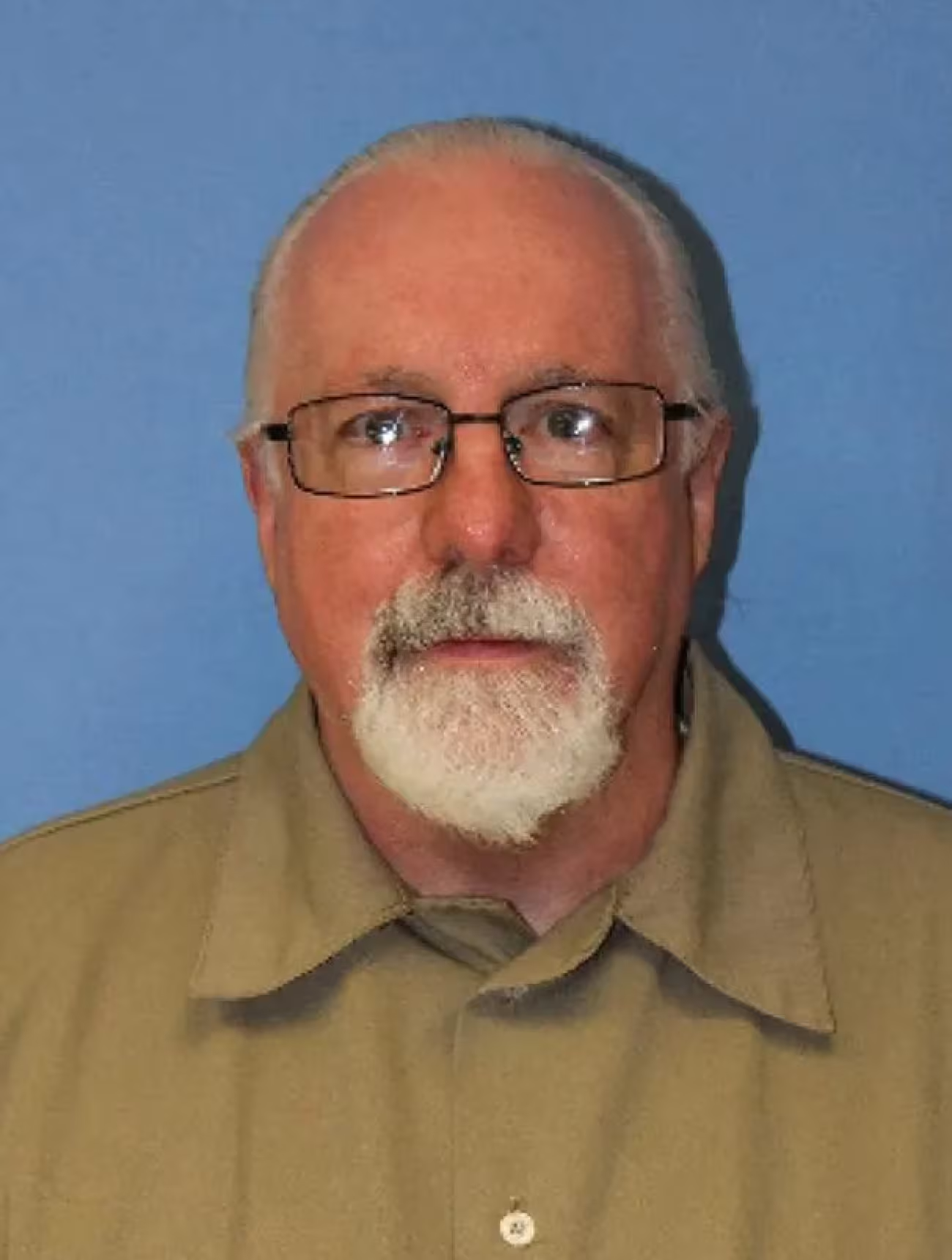
Mitchell Allen Gaff, also known as Sam Wise Price, pleaded guilty to murdering Susan Vesey and Judith "Judy" Weaver in Everett, Washington. The two women were killed four years apart, but their cases remained unsolved for decades until investigators connected Gaff to both crimes through modern DNA testing.
The breakthrough came from an unconventional police operation in January 2024, when undercover detectives collected Gaff's discarded chewing gum to obtain a fresh DNA sample. The evidence ultimately helped solve both murders. On May 13, 2026, Gaff was sentenced to 50 years to life in prison.
The 1980 Murder of Susan Vesey
Susan Vesey was murdered on July 12, 1980, one day after her 21st birthday. Her husband, Ken Vesey, discovered her body inside their Everett apartment after returning from work.
Investigators found that Susan had been sexually assaulted, bound with electrical cords, and strangled. Her two young children were also inside the apartment but survived the attack.
Ken initially became a suspect in the investigation, despite maintaining that he had been working overnight. His account was supported by witnesses who confirmed his alibi, but suspicion surrounding him continued for decades.
The case remained unresolved until investigators revisited the evidence in 2025 and discovered a DNA connection to Mitchell Gaff.
The 1984 Murder of Judy Weaver
Judy Weaver, 42, was a mother of two daughters and managed the Bel-Nes Cafe in Everett. On the evening of June 1, 1984, she celebrated the sale of her business with friends and her fiancé before deciding to walk home.
On June 2, firefighters responding to a report of a fire at her residence on Rucker Avenue discovered her body inside a smoke-filled bedroom. Weaver had been bound, sexually assaulted, and strangled. Investigators also found evidence that her clothing had been cut with a knife and that the fire had been deliberately set.
Her fiancé, Bill Richards, became the primary suspect during the original investigation. However, authorities never gathered sufficient evidence to charge him. Richards died in 1994 without the case being solved.
Chewing Gum Operation Provides the DNA Breakthrough
Everett Police Detective Susan Logothetti reopened the Weaver investigation in January 2023, hoping that advances in forensic DNA technology could identify the killer.
Laboratory testing revealed a DNA profile that pointed to Mitchell Allen Gaff, a registered sex offender with a history of violent sexual crimes. Investigators then sought a fresh DNA sample to strengthen the evidence.
On January 17, 2024, three undercover detectives visited Gaff's residence posing as representatives of a new chewing gum company. They offered him several pieces to sample and compare different flavors.
Gaff accepted the offer, chewed the gum, and spat it into a container held by one of the detectives. Investigators collected the discarded gum and sent it to a forensic laboratory for testing.
The resulting DNA profile matched biological evidence recovered from Weaver's crime scene, including vaginal swabs, clothing, and ligatures. Gaff was arrested in May 2024 and charged with Weaver's murder.
DNA Evidence Links Gaff to the Second Murder
The investigation took another important turn in January 2025 when Detective Logothetti received a voicemail from Ken Vesey, who wanted police to revisit his wife's unsolved murder.
After reviewing the original evidence, Logothetti noticed similarities between the two crime scenes. Both women had been sexually assaulted, strangled, and bound using cords.
Investigators submitted preserved evidence from Susan Vesey's case for comparison with Gaff's DNA profile. Laboratory testing confirmed that his DNA was also present in evidence from her murder.
The discovery connected Gaff to a second killing that had remained unresolved since 1980. On March 13, 2026, prosecutors formally charged him with Susan Vesey's murder.
Gaff Pleads Guilty and Receives 50 Years to Life
Gaff initially faced trial in September 2026, but the proceedings were avoided after he pleaded guilty to two counts of first-degree murder on April 16, 2026.
During the proceedings, Gaff admitted responsibility for the killings and provided statements concerning both crimes. His statements were consistent with the findings of the police investigations.
Prosecutors requested a 61-year prison sentence, while the defense argued for a shorter term, citing his age and history of treatment while incarcerated.
On May 13, 2026, a Snohomish County Superior Court judge sentenced Gaff to a minimum of 50 years and a maximum of life in prison.
Police Investigate Possible Additional Victims
Gaff's convictions have prompted investigators to review other unsolved cases for potential connections to his criminal history.
Before the two murders were solved, Gaff had already been convicted of violent sexual offenses, including an attack on two teenage sisters in Everett in 1984. He also spent approximately 23 years in civil confinement and treatment under Washington's sexually violent predator program before his release in 2018.
According to Detective Logothetti, investigators are examining unsolved homicides, sexual assaults, and other cold cases in Washington and beyond. Gaff had previously made admissions involving additional sexual assaults during psychological evaluations, although investigators have not publicly confirmed further murders linked to him.
Authorities are asking anyone with information about potential additional victims to contact the Everett Police Department tip line at 425-257-8450.
Conclusion
The murders of Susan Vesey and Judy Weaver remained unsolved for more than four decades, leaving their families with unanswered questions and allowing suspicion to linger around individuals who were never charged.
Modern DNA technology, combined with the unconventional chewing gum operation, ultimately helped investigators identify Mitchell Gaff and establish his connection to both killings. His guilty pleas and 50-years-to-life sentence brought a legal resolution to the two cold cases, while investigators continue reviewing whether other victims may be connected to his past crimes.
```
- Log in to post comments