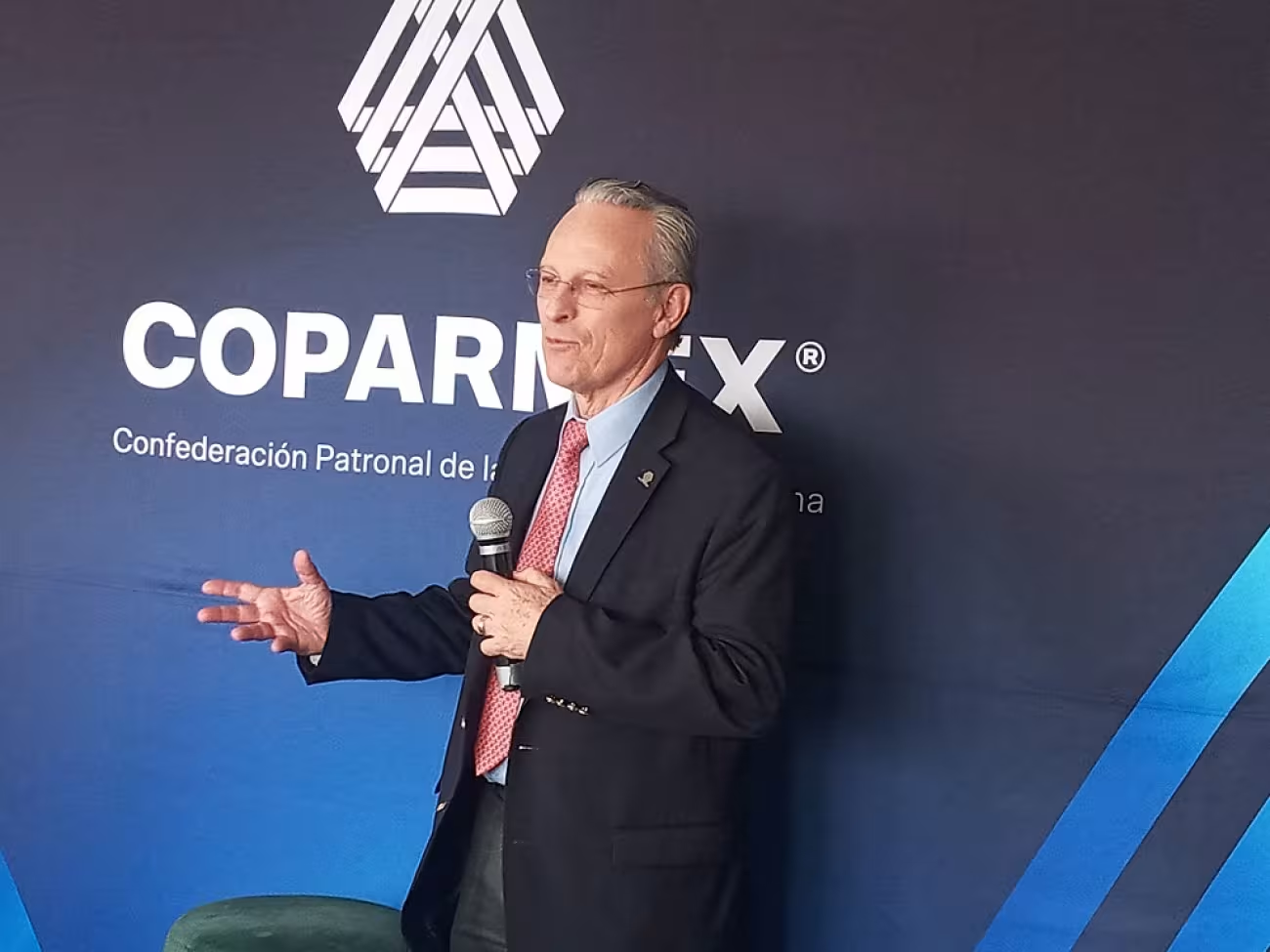
Mexico's private sector urged the federal government to introduce a temporary solidarity salary in April 2020 to protect millions of jobs threatened by the COVID-19 pandemic. The Mexican Employers' Confederation (COPARMEX) proposed a wage-sharing arrangement involving employers, workers and the government, with an estimated monthly public cost of nearly 97 billion Mexican pesos. The initiative aimed to prevent mass layoffs and business closures as pandemic restrictions disrupted economic activity.
Why Mexico's Private Sector Proposed a Solidarity Salary
On April 16, 2020, COPARMEX called on President Andrés Manuel López Obrador's administration to help businesses maintain employee wages during the public health emergency.
The proposal followed the extension of Mexico's social-distancing measures, which forced many companies to suspend operations or operate with significantly reduced revenue.
According to COPARMEX, Mexico lost 130,593 jobs registered with the Mexican Social Security Institute (IMSS) in March 2020. The organization warned that additional layoffs could follow if employers received no financial assistance.
Gustavo de Hoyos Walther, then president of COPARMEX, argued that temporary wage subsidies were necessary to support businesses, particularly micro, small and medium-sized enterprises struggling to cover payroll expenses.
How the Solidarity Salary Would Work
The proposed Salario Solidario was designed to share wage costs among the federal government, employers and employees while keeping workers formally employed.
Government support would be progressive, meaning lower-income workers would receive proportionally greater assistance.
- Workers earning one to three minimum wages: The government and employers would jointly cover their full regular salaries, preventing an income reduction.
- Higher-paid employees: Government contributions would decrease as salaries increased, with some employees accepting temporary wage reductions.
- Government contribution limit: The maximum public subsidy per worker would be equivalent to three general minimum wages.
- Employer obligations: Companies would continue paying their share of salaries and maintain employment relationships during the emergency.
The proposal also contemplated continued social security contributions and payroll-related taxes based on employees' original salaries, alongside requests to defer certain payments without interest.
Unlike a permanent minimum-wage increase, the solidarity salary was intended as temporary emergency assistance to preserve existing jobs.
How Much Would the Solidarity Salary Cost?
COPARMEX estimated that the maximum federal contribution would reach approximately MXN 96.8 billion per month, based on employment records from February 2020.
The original proposal identified 20,613,536 formally employed workers as potential beneficiaries. They were divided into three income categories:
- One to three minimum wages: 14,149,645 workers.
- Three to ten minimum wages: 5,350,678 workers.
- More than ten minimum wages: 1,113,213 workers.
The figures represented the estimated scope of the proposed program, not actual payments or confirmed beneficiaries.
COPARMEX suggested that the government could finance the initiative through adjustments to public spending or responsible borrowing. The organization argued that protecting formal employment would help preserve household purchasing power and limit further economic contraction.
COPARMEX Campaigns for Government Support
On April 20, 2020, COPARMEX expanded its campaign by publishing an appeal to workers in newspapers across Mexico's 32 states.
The employers' organization, which reported having 84 regional representations and more than 36,000 affiliated companies employing approximately 4.8 million people, encouraged workers to support a national agreement on emergency wage protection.
COPARMEX emphasized that maintaining existing jobs would be less costly than rebuilding employment after widespread business closures.
The organization sought cooperation among businesses, workers and the federal government rather than placing the financial burden entirely on employers.
Expansion Into the Solidarity Remedies Plan
As Mexico's employment crisis deepened, COPARMEX incorporated the solidarity salary into a broader package called Remedios Solidarios, or Solidarity Remedies.
The package, promoted during June and July 2020, contained three measures:
- Salario Solidario: A temporary wage subsidy designed to preserve existing formal-sector jobs.
- Seguro Solidario: Financial assistance equivalent to one general minimum wage for eligible formal-sector workers who had lost their jobs.
- Bono Solidario: A hiring incentive intended to encourage companies to create or restore formal employment.
COPARMEX estimated the combined cost of these measures at approximately MXN 204 billion, representing slightly less than 1% of Mexico's gross domestic product under the organization's calculations.
The proposal reflected growing concern over unemployment, declining household income and the expansion of informal work during the pandemic.
Did Mexico Implement the Solidarity Salary?
The original COPARMEX solidarity salary proposal was not adopted as a nationwide federal wage-subsidy program under its proposed terms.
A report by the International Labour Organization examining support for micro, small and medium-sized enterprises in Latin America found that Mexico had not introduced direct payroll subsidies for affected companies by September 2020.
Mexico instead relied on other emergency measures, including credit support for certain businesses and payment deferrals. These initiatives differed from COPARMEX's proposal to have the federal government directly share wage expenses.
Consequently, the estimated 20.6 million workers should be understood as the proposal's potential coverage, not the number of people who received solidarity salary payments.
How the Proposal Differs From Mexico's Later Wage Initiatives
The solidarity salary proposal addressed an exceptional employment crisis in 2020. It should not be confused with Mexico's subsequent minimum-wage increases or voluntary efforts to improve private-sector compensation.
In December 2024, COPARMEX and other business and civil society organizations promoted Vida Digna, an initiative encouraging companies to provide workers with a net monthly income of at least MXN 12,500.
Unlike Salario Solidario, Vida Digna was presented as a voluntary employer commitment to improve living standards, independent of statutory minimum-wage negotiations.
The Economic Significance of Mexico's Solidarity Salary Proposal
COPARMEX's solidarity salary campaign highlighted the financial pressure faced by companies required to suspend or restrict operations during the pandemic.
The proposal was based on the principle that temporary public support for payrolls could help businesses retain experienced employees, protect household income and reduce the economic damage associated with prolonged unemployment.
Although the initiative did not become the nationwide program its supporters sought, it remains a notable example of private-sector advocacy for government-backed employment protection during Mexico's COVID-19 crisis.
- Log in to post comments