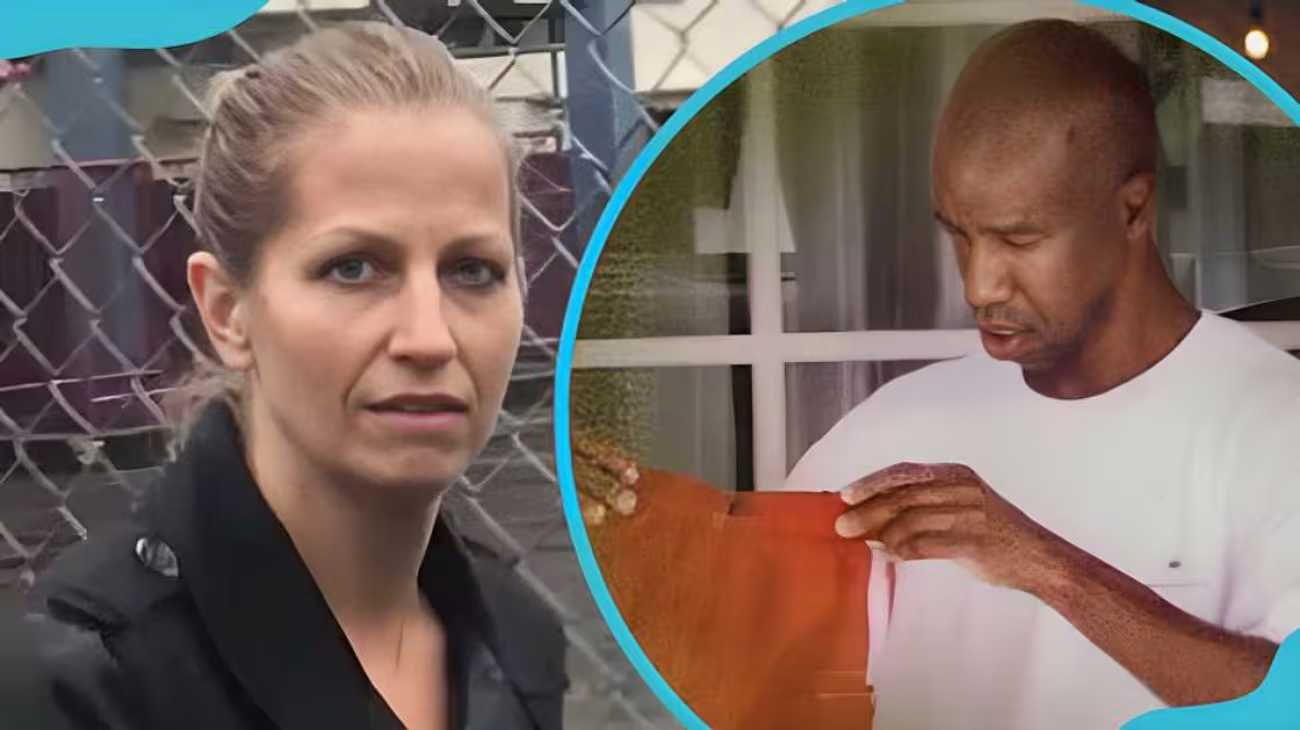
Karla Homolka remains one of Canada's most controversial convicted criminals. Her involvement in a series of sexual assaults committed alongside her former husband, Paul Bernardo, shocked the country during the early 1990s. The crimes included the murders of teenage girls Leslie Mahaffy and Kristen French, as well as the sexual assaults of Homolka's younger sister, Tammy, who died in December 1990.
Known collectively in the media as the "Ken and Barbie Killers," Homolka and Bernardo initially appeared to be an attractive young couple living an ordinary suburban life. Their public image collapsed after investigators uncovered evidence connecting them to the abduction, sexual assault and murder of teenage victims.
Homolka eventually negotiated a controversial plea agreement, pleaded guilty to two counts of manslaughter and received a 12-year prison sentence. She was released on July 5, 2005, after completing her sentence.
Following her release, she gradually disappeared from public view and established a new identity. She became associated with the names Leanne Teale and Leanne Bordelais, married Thierry Bordelais and reportedly had three children. In 2012, journalist Paula Todd located her in Guadeloupe, where she was living with her family.
Her subsequent return to Quebec attracted renewed attention in 2017, when reports revealed that she had volunteered at her children's private elementary school in the Montreal area. The incident reignited public debate about rehabilitation, child protection and the rights of convicted offenders who have completed their sentences.
More than two decades after her release, Homolka remains a subject of intense public interest. However, reliable information about her present residence, marriage and private family circumstances is limited. The most recent publicly documented developments concerning her personal life should therefore be distinguished from speculation about where she lives today.
Who Is Karla Homolka?
Karla Leanne Homolka was born on May 4, 1970, in Mississauga, Ontario, Canada.
She grew up in a middle-class Canadian family and attended school in the St. Catharines area. Before her criminal involvement became public, she worked at an animal clinic and appeared to lead an ordinary young adult life.
Her relationship with Paul Bernardo eventually connected her to a series of violent sexual crimes that became among the most notorious criminal cases in Canadian history.
Homolka was not merely a spouse who happened to be present during Bernardo's crimes. Evidence presented during the criminal proceedings established that she actively participated in the assaults involving Leslie Mahaffy and Kristen French.
Names Associated With Karla Homolka
Homolka has been publicly associated with several names throughout her life:
- Karla Leanne Homolka: Her original identity.
- Karla Leanne Teale: A name associated with her marriage to Paul Bernardo.
- Leanne Teale: An identity associated with her life after prison.
- Leanne Bordelais: The name associated with her later marriage to Thierry Bordelais.
These different names have contributed to public interest in her post-prison life, particularly because she sought to maintain privacy after completing her sentence.
Paul Bernardo and Karla Homolka: The Relationship Behind the Crimes
Homolka met Paul Bernardo in 1987, when she was 17 years old and he was approximately 23.
They reportedly met during a pet convention in Toronto. Bernardo subsequently began visiting Homolka at her family home in St. Catharines.
The relationship developed quickly. They became engaged in December 1989 and married on June 29, 1991.
To people outside their relationship, they appeared to be a conventional young couple. However, their relationship concealed a pattern of sexual violence that would eventually become the subject of a major criminal investigation.
Bernardo's Earlier Crimes: The Scarborough Rapist
Before the murders of Leslie Mahaffy and Kristen French, Bernardo had committed a series of sexual assaults against women and teenage girls in the Toronto area.
Between 1987 and 1990, he became known as the Scarborough Rapist because of his attacks in the Scarborough district.
Investigators later connected Bernardo to multiple sexual assaults through DNA evidence.
His criminal history became particularly important after police began investigating his involvement in the murders of teenage girls.
Bernardo was arrested on February 17, 1993, after DNA evidence connected him to the Scarborough sexual assaults.
The Victims: Tammy Homolka, Leslie Mahaffy and Kristen French
The crimes associated with Homolka and Bernardo involved several victims. Three teenage girls became central to the investigation, although their deaths had different legal classifications in the proceedings against Homolka.
Tammy Homolka: The Sister Who Became a Victim
Tammy Homolka was Karla's younger sister. She was 15 years old when she died in December 1990.
Evidence established that Tammy had been drugged and sexually assaulted by Bernardo, with Homolka participating in the events.
The couple used sedatives obtained through Homolka's employment at an animal clinic.
During a subsequent assault, Tammy became unconscious and choked on her vomit. Bernardo and Homolka attempted to revive her, but she could not be saved.
Her death was initially treated as accidental, and investigators did not immediately recognize the criminal circumstances surrounding it.
Importantly, Homolka was not convicted of Tammy's death under the same two manslaughter counts that formed the basis of her plea agreement. The federal government's historical review describes Tammy's death as accidental following sexual assaults while she was unconscious.
The circumstances nevertheless became a crucial part of the wider investigation and demonstrated the seriousness of the couple's criminal conduct.
Leslie Mahaffy: Abducted and Murdered at 14
Leslie Mahaffy was 14 years old when she was abducted in Burlington, Ontario, in June 1991.
Bernardo took her to the residence he shared with Homolka, where she was sexually assaulted and tortured.
She was subsequently murdered, and her body was dismembered and concealed in concrete blocks before being disposed of in Lake Gibson.
The concrete blocks were discovered on June 29, 1991, the same day Bernardo and Homolka married.
The discovery of the remains became a major development in the investigation.
Kristen French: The Second Murder Victim
Kristen French was 15 years old when she was abducted in April 1992.
She was taken near her home in St. Catharines and transported to the residence shared by Bernardo and Homolka.
Investigators established that she was subjected to sexual violence over several days before being murdered.
Her remains were discovered on April 30, 1992, in a wooded area near Burlington.
The murder of Kristen French, together with the killing of Leslie Mahaffy, became the foundation of Bernardo's first-degree murder convictions.
How Investigators Uncovered Homolka's Involvement
The investigation initially focused heavily on Bernardo because of his connection to the Scarborough sexual assaults.
However, the situation changed dramatically in January 1993, when Homolka approached authorities following a violent domestic incident involving Bernardo.
She had suffered serious injuries during an assault and began cooperating with investigators.
She told police about Bernardo's criminal behavior and provided information connecting him to the deaths of Tammy, Leslie and Kristen.
At that stage, investigators faced a difficult situation. Homolka's testimony was potentially essential to securing a conviction against Bernardo, but her own involvement in the crimes also raised serious questions about her credibility and criminal responsibility.
The Initial Portrayal of Homolka as an Abused Wife
During the early investigation, Homolka portrayed herself as a victim of Bernardo's violent and controlling behavior.
She claimed that she had been forced or manipulated into participating in the crimes.
Her injuries following the January 1993 assault helped support the prosecution's initial presentation of her as a battered spouse.
However, the prosecution's understanding of her role changed significantly after investigators obtained the videotapes from Bernardo's former lawyer.
The Videotapes That Changed Everything
One of the most important developments in the case was the discovery of videotapes documenting sexual assaults involving the victims.
Bernardo's former defense lawyer, Ken Murray, discovered the recordings in 1993 but did not immediately surrender them to prosecutors.
The tapes were eventually turned over in September 1994, more than a year after they had been discovered.
The recordings demonstrated that Homolka had participated more actively in the assaults of Leslie Mahaffy and Kristen French than her original account suggested.
This evidence fundamentally changed the public understanding of her role.
Why the Videotapes Were So Important
Before the recordings became available, prosecutors depended heavily on Homolka's testimony to establish Bernardo's involvement.
The videotapes provided independent evidence of the crimes and contradicted important parts of Homolka's earlier narrative.
They also raised serious questions about the plea agreement she had already negotiated.
The recordings became a central part of Bernardo's trial, although their treatment in court was subject to restrictions intended to protect the victims' dignity and privacy.
The families later sought destruction of the recordings, and the remaining evidentiary tapes were destroyed in late 2001 following the conclusion of the legal proceedings and appeals.
The Controversial Plea Agreement: Why Homolka Received 12 Years
Between February and May 1993, Homolka and her lawyer negotiated an agreement with prosecutors.
She agreed to plead guilty to two counts of manslaughter relating to the deaths of Leslie Mahaffy and Kristen French.
In exchange, she agreed to cooperate with the prosecution and testify against Bernardo.
The agreed sentence was 12 years in prison.
The agreement was negotiated before prosecutors had access to the full significance of the videotapes.
Why the Deal Triggered Public Outrage
When the videotapes were eventually recovered, they showed that Homolka had been an active participant in the sexual assaults.
Many Canadians believed that a 12-year sentence was far too lenient given the seriousness of the crimes.
The controversy became particularly intense because the public had initially been given an incomplete understanding of her role.
The agreement became known in media coverage as a highly controversial bargain that appeared to reward an accomplice in exchange for testimony against a more dangerous offender.
The Official Review of the Plea Agreement
Ontario authorities subsequently examined the circumstances surrounding the agreement.
The review concluded that the prosecution had made its decision based on the evidence available at the time and the need to secure Bernardo's conviction.
The review recognized that negotiating with an accomplice was deeply uncomfortable but concluded that the agreement was justified under the circumstances.
That conclusion did not eliminate public criticism.
The controversy continues to be discussed in Canadian legal and criminal justice debates because it demonstrates the risks of negotiating plea agreements before all relevant evidence has been discovered.
Paul Bernardo's Trial and Homolka's Testimony
Bernardo's murder trial began in May 1995.
Homolka became a central prosecution witness and testified about the crimes committed during their relationship.
Her testimony described the abductions, assaults and murders involving Leslie Mahaffy and Kristen French.
The defense attempted to undermine her credibility and suggested that she had played a more active role in the murders than she admitted.
Bernardo also sought to shift responsibility toward his former wife.
On September 1, 1995, Bernardo was convicted of first-degree murder in the deaths of Mahaffy and French, as well as other serious offenses.
He received a life sentence with no possibility of parole for 25 years and was designated a dangerous offender.
Homolka and Bernardo had already divorced in February 1994.
July 2005: Karla Homolka Is Released From Prison
Homolka was released on July 5, 2005, after completing her 12-year sentence.
Her release triggered widespread anger among victims' families and members of the Canadian public.
Many believed that the punishment did not adequately reflect the severity of her involvement.
Following her release, Homolka gave a French-language radio interview in which she expressed regret for her actions.
She acknowledged that what she had done was terrible and discussed her relationship with Bernardo as a factor in her behavior.
However, her statements did not resolve public questions about the extent of her responsibility.
Her release marked the beginning of a new chapter in which she attempted to establish a private identity away from the criminal case.
From Karla Homolka to Leanne Teale and Leanne Bordelais
After prison, Homolka became associated with the name Leanne Teale and later with Leanne Bordelais.
The different names became part of her effort to establish a life outside the intense public scrutiny attached to her original identity.
Her later marriage to Thierry Bordelais contributed to the adoption of the Bordelais surname in public reporting.
Using a different name did not change her criminal convictions or erase her history.
However, it made her less recognizable to the general public and allowed her to maintain a degree of privacy.
Who Is Thierry Bordelais, Karla Homolka's Husband?
Thierry Bordelais is the man Homolka married following her release from prison.
Canadian media identified him as the brother of Sylvie Bordelais, the lawyer who represented Homolka during her criminal proceedings.
This connection attracted additional attention because her subsequent husband was related to someone who had played an important role in the legal proceedings that resulted in her 12-year sentence.
The couple reportedly married in 2005 and later established a family.
Unlike Homolka, Thierry Bordelais has generally avoided public attention.
Reliable information about his occupation, professional background and current private life is limited.
There is no verified public evidence establishing that he participated in or had knowledge of the crimes committed by Homolka and Bernardo.
Karla Homolka's Three Children
One of the most significant developments in Homolka's post-prison life was the formation of a family with Thierry Bordelais.
In February 2007, Canadian media reported that Homolka had given birth to her first child, a boy.
By 2012, journalist Paula Todd reported that the couple had three children: two boys and one girl.
The family was living in Guadeloupe at the time of Todd's investigation.
Why the Children's Privacy Matters
The children were born after Homolka's criminal convictions and were not involved in their parents' past offenses.
Journalist Paula Todd deliberately avoided publishing their names and exact home address.
This distinction is important when reporting on the case.
The public has a legitimate interest in understanding the life of a notorious convicted offender, but that interest does not automatically justify exposing the identities or private circumstances of innocent children.
There is also no reliable evidence that the children have been involved in any criminal activity.
2012: Paula Todd Finds Homolka in Guadeloupe
In June 2012, Canadian journalist Paula Todd published her investigation titled Finding Karla: How I Tracked Down an Elusive Serial Child Killer and Discovered a Mother of Three.
The investigation traced Homolka to Guadeloupe, a French overseas department in the Caribbean.
She was reportedly living there with Thierry Bordelais and their three children under the name Leanne Bordelais.
The investigation provided one of the most detailed public accounts of her life after prison.
What Paula Todd Discovered
Todd described a family that appeared to be living a relatively ordinary domestic life.
Her reporting focused on the contrast between Homolka's notorious criminal history and her apparent role as a wife and mother.
The investigation also raised questions about how an individual with such a serious criminal background could establish a new identity and live away from the intense attention of Canadian media.
However, Todd's observations were a journalistic account of a particular period in Homolka's life, not a psychological assessment or independent determination that she had been rehabilitated.
Return to Quebec and the Montreal School Controversy
Subsequent reporting indicated that Homolka and her family returned to Quebec after their period in Guadeloupe.
By 2016 and 2017, media reports placed the family in the Montreal metropolitan area, including the suburb of Châteauguay.
Her presence became a public issue in June 2017 when news organizations reported that she had volunteered at her children's private elementary school.
What Happened at the School?
Reports indicated that Homolka had participated in several school activities.
These included accompanying students on a field trip, bringing a dog for a classroom activity and demonstrating knitting.
The school reportedly knew about her criminal history before she began volunteering.
Nevertheless, the news generated concern among parents and members of the public.
The School's Response
Following public criticism, the school and the organization operating it issued statements addressing concerns about student safety.
The institution stated that it would not permit individuals with criminal records to volunteer in any capacity on school grounds.
The controversy demonstrated the practical difficulties educational institutions face when dealing with parents who have serious criminal histories.
It also highlighted the importance of separating the rights of children to attend school from the responsibilities of institutions to maintain appropriate safeguarding policies.
Homolka's children should not be held responsible for their mother's past crimes.
Where Is Karla Homolka Now in 2026?
Karla Homolka completed her prison sentence in July 2005 and has not been reported as returning to custody for the crimes covered by her plea agreement.
The most detailed publicly documented account of her post-prison family life came from Paula Todd's 2012 investigation in Guadeloupe.
Reports in 2016 and 2017 subsequently placed her family in the Montreal metropolitan area.
However, as of November 6, 2026, no sufficiently reliable and recent public source establishes her exact current address, occupation, marital status or daily activities.
Some websites and online discussions claim to know her current location or suggest that she lives separately from her husband. Such claims should not be treated as established facts without independent verification.
The most accurate conclusion is that Homolka has maintained a largely private life following her release, while the last well-documented public reports place her family in Quebec.
Paul Bernardo in 2026: Prison, Parole and the Latest Developments
Paul Bernardo remains imprisoned in Canada, serving an indeterminate life sentence for the murders of Leslie Mahaffy and Kristen French.
He was designated a dangerous offender and has remained under the supervision of Canada's correctional system since his arrest in 1993.
The Controversial Transfer to La Macaza
In November 2023, Bernardo was transferred from Millhaven Institution, a maximum-security facility in Ontario, to La Macaza Institution, a medium-security prison in Quebec.
The transfer generated significant public criticism because of the seriousness of his crimes and his dangerous-offender designation.
Correctional Service Canada defended the decision, explaining that security classifications are based on risk assessments, institutional behavior and other relevant factors.
The agency emphasized that medium-security institutions remain secure facilities with controlled inmate movements and strict perimeter protections.
Bernardo's Previous Parole Decisions
Bernardo has repeatedly sought parole, but his applications have been denied.
His most recent completed parole review in November 2024 resulted in another denial.
The victims' families have continued to oppose his release, emphasizing the severity of the crimes and the continuing impact on their lives.
September 2026: The Next Parole Hearing Is Postponed
In September 2026, the Parole Board of Canada confirmed that a hearing scheduled for October 20 had been postponed.
According to CHCH News, the lawyer representing the victims' families, Tim Danson, was informed that the hearing would instead take place in January 2027.
The board did not publicly provide a definitive explanation for the postponement.
Danson said that the board had indicated that additional documents or materials needed to be reviewed.
The delay is significant because it means the families of the victims will face another parole process in early 2027 rather than October 2026.
As of November 6, 2026, Bernardo remains incarcerated and has not been granted parole.
The Lasting Controversy: Rehabilitation, Public Safety and Accountability
Homolka's case continues to raise difficult questions about the relationship between criminal punishment and rehabilitation.
She completed the sentence imposed by the court, which means that she is legally entitled to live outside prison unless another legal restriction or proceeding applies.
However, completing a sentence does not necessarily restore public trust or erase the consequences of the crimes.
Can an Offender Rebuild a Normal Family Life?
Homolka's marriage and reported role as a mother generated significant public debate.
Some people argued that she should be allowed to establish a family after completing her sentence.
Others questioned whether someone involved in such serious crimes should be allowed to participate in activities involving children.
These concerns became particularly visible during the 2017 school controversy.
The debate illustrates that rehabilitation is not simply a question of whether an offender has completed a prison sentence. It also involves risk assessment, institutional safeguards and the protection of people who may be vulnerable.
The Rights of Her Children
One important ethical distinction is that Homolka's children are not responsible for her crimes.
They should not be subjected to public harassment, exposure or discrimination because of their mother's history.
Responsible reporting should focus on verified information about Homolka's life and legal history rather than identifying her children or exposing their private circumstances.
Timeline of Karla Homolka's Crimes and Life After Prison
| Date | Event |
|---|---|
| May 4, 1970 | Karla Homolka is born in Mississauga, Ontario. |
| 1987 | She meets Paul Bernardo. |
| July 1990 | Tammy Homolka is drugged and sexually assaulted. |
| December 1990 | Tammy dies after another assault while unconscious. |
| June 1991 | Leslie Mahaffy is abducted and murdered. |
| June 29, 1991 | Homolka and Bernardo marry. |
| April 1992 | Kristen French is abducted and murdered. |
| January 1993 | Homolka reports serious domestic violence and begins cooperating with investigators. |
| February 1993 | Bernardo is arrested. |
| May 1993 | Homolka's plea agreement is negotiated. |
| June 1993 | Homolka's criminal proceedings take place. |
| September 1994 | Videotapes documenting the assaults are surrendered to prosecutors. |
| September 1, 1995 | Bernardo is convicted of first-degree murder. |
| July 5, 2005 | Homolka is released after serving her 12-year sentence. |
| February 2007 | Reports reveal that Homolka has given birth to her first child. |
| 2005–2007 | Homolka marries Thierry Bordelais. |
| June 2012 | Paula Todd publishes her investigation revealing Homolka's life in Guadeloupe with three children. |
| April 2016 | Reports place Homolka and her children in the Châteauguay area near Montreal. |
| June 2017 | Reports about her volunteering at her children's school generate public controversy. |
| November 2024 | Bernardo's parole application is denied. |
| September 2026 | Bernardo's scheduled October parole hearing is postponed to January 2027. |
| November 6, 2026 | Homolka's exact current residence and private family circumstances remain unverified in recent public reporting. |
Frequently Asked Questions
Who is Karla Homolka?
Karla Homolka is a Canadian woman who pleaded guilty to two counts of manslaughter relating to the deaths of Leslie Mahaffy and Kristen French. She was also involved in the sexual assaults of Tammy Homolka, her younger sister, who died in 1990.
What is Karla Homolka's new name?
She has been publicly associated with the names Leanne Teale and Leanne Bordelais. The latter is associated with her marriage to Thierry Bordelais.
Who is Thierry Bordelais?
Thierry Bordelais is Homolka's later husband. Canadian media identified him as the brother of Sylvie Bordelais, the lawyer who represented Homolka during her criminal proceedings.
How many children does Karla Homolka have?
Journalist Paula Todd reported in 2012 that Homolka and Thierry Bordelais had three children, two boys and one girl.
Where did Karla Homolka live after prison?
She was reported to have lived in Guadeloupe with her husband and children before returning to Quebec. Later reports placed the family in the Montreal metropolitan area.
When was Karla Homolka released?
She was released from prison on July 5, 2005, after completing her 12-year sentence.
Why did Karla Homolka receive only 12 years?
She negotiated a plea agreement with prosecutors, pleading guilty to two manslaughter counts and agreeing to testify against Paul Bernardo. The agreement was negotiated before prosecutors obtained the videotapes revealing the full extent of her participation.
Was Karla Homolka convicted of murdering her sister Tammy?
Her 12-year plea agreement concerned the manslaughter deaths of Leslie Mahaffy and Kristen French. Tammy's death was initially classified as accidental after sexual assaults while she was unconscious. It should not be confused with the two manslaughter convictions.
Is Karla Homolka still married to Thierry Bordelais?
They were publicly reported as a married couple with three children. However, reliable recent reporting has not independently confirmed their current marital status.
Where is Karla Homolka now in 2026?
Her precise current residence has not been established through reliable recent public reporting. The latest well-documented reports placed her family in Quebec.
Where is Paul Bernardo now?
Bernardo remains incarcerated in Canada at La Macaza Institution in Quebec, according to recent reporting. His parole hearing scheduled for October 2026 was postponed to January 2027.
Conclusion: Karla Homolka's Life After Canada's Notorious Ken and Barbie Killers Case
Karla Homolka's story remains one of the most controversial criminal cases in Canadian history because of the nature of the crimes, her active participation and the extraordinary plea agreement that allowed her to leave prison after 12 years.
Her relationship with Paul Bernardo connected her to a series of sexual assaults involving teenage victims. The murders of Leslie Mahaffy and Kristen French became the foundation of Bernardo's first-degree murder convictions, while the death of Homolka's sister Tammy revealed another disturbing dimension of their criminal conduct.
The recovery of the videotapes fundamentally changed public understanding of Homolka's involvement and intensified criticism of the plea agreement.
After her release in 2005, Homolka established a new identity, married Thierry Bordelais and reportedly became the mother of three children. Paula Todd's 2012 investigation placed the family in Guadeloupe, while subsequent reports indicated a return to Quebec and renewed public controversy over her involvement in school activities.
As of November 2026, her precise whereabouts and private family circumstances remain largely unknown. The most reliable public record documents her past criminal case and earlier family life, not a confirmed account of her present-day activities.
Meanwhile, Paul Bernardo remains imprisoned, with his next parole hearing postponed to January 2027.
Ultimately, the Homolka case illustrates the difficult balance between criminal accountability, rehabilitation, public safety and the rights of innocent family members. Her completion of a prison sentence does not erase the suffering of the victims or their families, while her children should never be held responsible for crimes committed by their mother.
```
- Log in to post comments