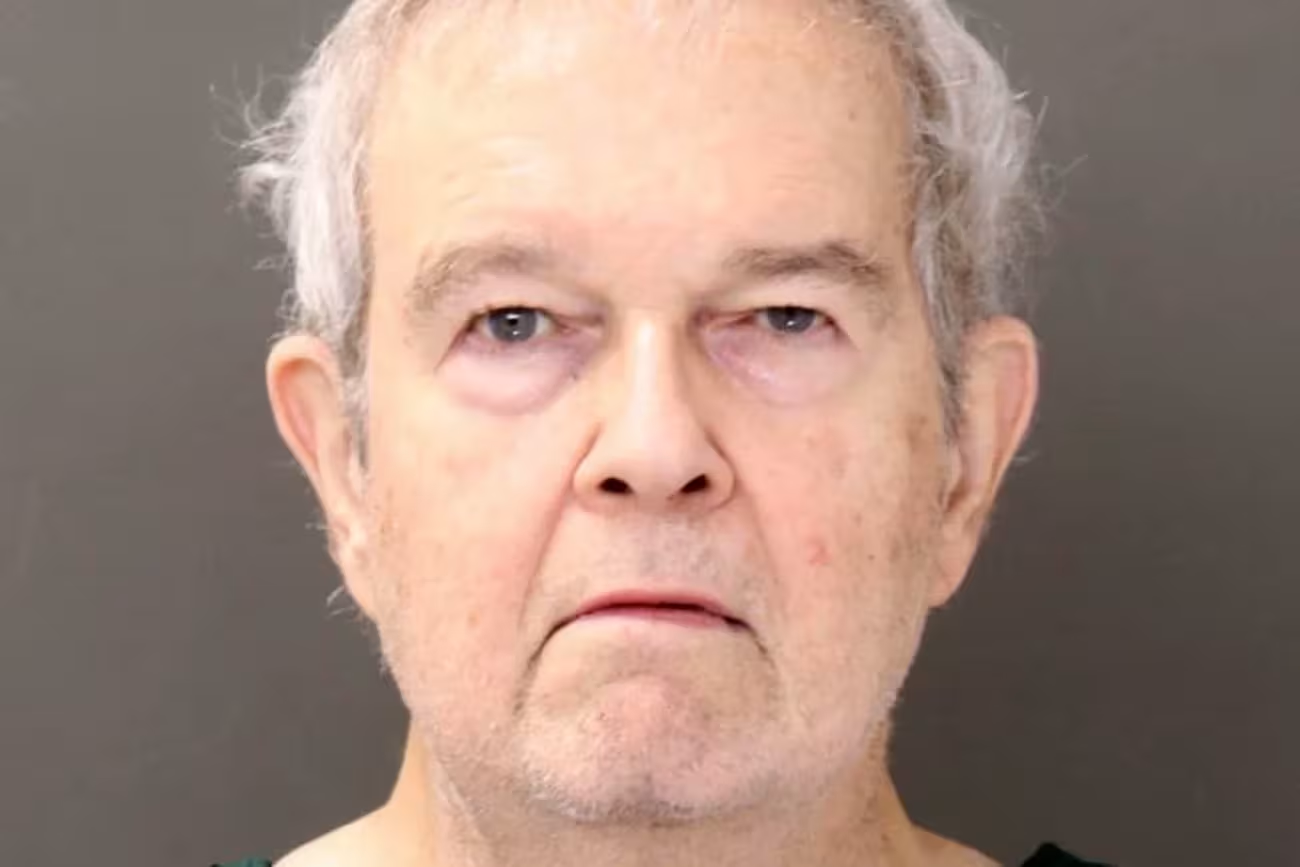
James Stephen Hill, a retired Ohio State University professor, has been sentenced to life in prison after admitting to murdering his wife, Mary Kathleen Hill, in a case involving an alleged online sextortion scheme. Investigators said Hill told them that a woman he met through a dating platform had threatened to publish intimate photographs of him unless he paid $15,000 in Apple gift cards.
The killing occurred on November 9, 2025, at the couple's home in Upper Arlington, Ohio. Mary Hill, 64, was fatally stabbed, while James Hill, then 76, also inflicted injuries on himself in an apparent murder-suicide attempt. He survived and was subsequently arrested.
Nearly a year later, the case reached its conclusion in criminal court. On October 28, 2026, Hill pleaded guilty to murder and cruelty to companion animals. Franklin County Common Pleas Judge David Young sentenced him to 15 years to life in prison, with the possibility of parole after serving 15 years. The animal cruelty sentence will run concurrently.
The case attracted national attention because of the circumstances described by Hill during police questioning. According to court records, he claimed that the threat to expose his nude photographs had left him feeling trapped. However, the alleged sextortion did not justify or excuse his decision to kill his wife.
The case also highlights the potentially devastating consequences of online sexual blackmail, particularly when victims respond to threats with secrecy, panic and decisions that endanger themselves or others.
1. Who Is James Stephen Hill?
James Stephen Hill is a former academic associated with Ohio State University in Columbus, Ohio. He spent decades working at the university and was involved in its music program before retiring.
According to university information reported by local media, Hill was first hired by Ohio State in 1972 and subsequently employed there from 1978 through 2015.
His long academic career meant that he was known to former colleagues, students and members of the university's music community.
Before the murder investigation, Hill was not widely known outside his professional and local circles. His name became national news following the November 2025 killing of his wife and the subsequent revelation of the alleged online blackmail scheme.
His Connection to Ohio State University
Hill's professional history was connected to the university's music activities. He was described in local reporting as a retired professor who remained associated with musical performances and the wider academic community.
Following the discovery of the crime, former students and people familiar with his professional life expressed shock at the allegations.
His case illustrates that professional status, education and a long-standing public reputation do not necessarily reveal the private circumstances or decisions that may lead to criminal behavior.
2. Who Was Mary Kathleen Hill?
Mary Kathleen Hill, 64, was James Hill's wife and the victim of the November 9, 2025, homicide.
She was found dead inside the couple's residence in the 1500 block of Fishinger Road in Upper Arlington, a community near Columbus, Ohio.
Her death was the central event in the criminal investigation and ultimately led to her husband's murder conviction.
Coverage of the case initially concentrated heavily on the alleged sextortion scheme and the circumstances surrounding James Hill's actions. However, it is important not to reduce Mary to a secondary character in a sensational crime story.
She was an individual whose life was taken through an act of violence. Her death affected family members, friends and people in the surrounding community.
3. The Alleged $15,000 Sextortion Scheme
According to the account James Hill gave investigators, the events leading to the murder began with an online relationship.
Hill reportedly met a woman through a dating website or online dating platform. During their communications, the two exchanged intimate photographs, including nude images of Hill.
He subsequently claimed that the woman threatened to distribute the photographs unless he paid $15,000.
The reported demand was not simply for a conventional bank transfer. According to court records cited by local media, the woman requested payment in Apple gift cards.
How the Alleged Blackmail Developed
The reported sequence involved several stages:
- Hill met a woman through an online dating platform.
- The two established private communication.
- They exchanged intimate photographs.
- The woman allegedly threatened to release Hill's photographs publicly.
- She reportedly demanded $15,000 in Apple gift cards.
- Hill became increasingly distressed about the possibility of exposure.
These details are based on Hill's statements to investigators and the accounts contained in court documents. The identity of the alleged blackmailer and the full circumstances of the online interaction have not been independently established in the public reporting reviewed.
Why Apple Gift Cards Were Requested
Requests for gift cards are a common feature of online fraud and blackmail schemes.
Unlike conventional bank transfers, gift-card payments can be difficult to reverse after redemption. Criminals may request the card numbers and security codes, allowing them to obtain the stored value or transfer it through intermediaries.
Apple gift cards are intended to purchase Apple products and services. They are not designed to function as a legitimate method of paying fines, settling legal disputes or responding to blackmail demands.
A demand for gift cards in exchange for keeping intimate photographs private should therefore be treated as a major warning sign of fraud or extortion.
4. November 9, 2025: The Fatal Incident at Fishinger Road
On November 9, 2025, Upper Arlington police responded to the couple's residence after receiving a request for medical assistance connected to a brief 911 call.
Officers arrived at the home in the 1500 block of Fishinger Road and discovered a serious stabbing incident.
Mary Hill was found with a fatal stab wound to her chest. James Hill was also inside the residence with injuries consistent with a self-inflicted stabbing.
Emergency responders transported Hill to a hospital for treatment. Mary was pronounced dead at the scene.
The Police Response
The investigation established that the incident involved a violent attack inside the couple's home.
Hill subsequently told investigators that he had stabbed his wife and then attempted to take his own life.
His statements provided investigators with an account of the events and introduced the alleged sextortion scheme as a claimed motive behind the violence.
However, the existence of an alleged blackmail threat did not change the criminal responsibility associated with the killing.
5. How James Hill Described the Killing
According to court documents reported by ABC6, The Columbus Dispatch and other local media, Hill described approaching his wife while she was working at a computer.
He reportedly began rubbing her shoulders as though giving her a massage before stabbing her in the chest with a kitchen knife.
Hill allegedly apologized to Mary during the attack.
His account also indicated that he had initially considered using a firearm but could not locate guns he had hidden years earlier.
He subsequently used a kitchen knife.
The reported details were particularly disturbing because they described an attack carried out in the domestic environment of a married couple rather than during an external confrontation.
The Attempted Murder-Suicide
After stabbing Mary, Hill reportedly attempted to injure the couple's dog. The animal managed to escape further harm.
He then deleted photographs and documents from his computer before calling 911 and stabbing himself in the chest.
Police found him injured inside the residence. He survived and received medical treatment.
The reported sequence was consistent with an apparent murder-suicide attempt, although the criminal conviction ultimately concerned the murder of Mary and cruelty to a companion animal.
6. The Role of the Couple's Dog
The dog became another part of the criminal case because Hill reportedly attempted to stab the animal after attacking his wife.
According to court records cited in media reports, the dog managed to run away and survived.
The incident resulted in an additional animal-related criminal charge.
During the subsequent plea proceedings, Hill admitted to cruelty to companion animals as part of the criminal resolution.
The animal-related offense was treated separately from the murder conviction, although the sentences were ordered to run concurrently.
7. The Investigation and Criminal Charges
Following the incident, investigators examined the crime scene, Hill's statements, electronic evidence and the circumstances surrounding the alleged online blackmail.
Hill was initially charged with aggravated murder.
The prosecution's case centered on the fatal stabbing of Mary, the circumstances of the attack and the evidence collected during the investigation.
The alleged sextortion scheme was relevant to understanding the background of the crime, but it did not constitute a legal defense to murder.
Electronic Evidence
Digital material was particularly important because the alleged blackmail involved online communications and intimate photographs.
According to court documents described in local reporting, Hill deleted photographs and documents from his computer after the attack.
Such activity can complicate investigations because digital records may contain evidence about communications, payment demands and the identity of individuals involved.
However, deleting material does not necessarily establish that every relevant file was permanently destroyed or that investigators were unable to examine other evidence.
8. October 28, 2026: James Hill Pleads Guilty
The criminal proceedings reached a major turning point on October 28, 2026.
James Hill, then 77, pleaded guilty to murder and cruelty to companion animals in Franklin County Common Pleas Court.
The plea agreement resolved the principal criminal case without requiring a full jury trial.
Prosecutors dismissed the aggravated murder charge as part of the agreement after Hill entered his guilty pleas.
Why the Guilty Plea Matters
A guilty plea is a formal admission of criminal responsibility before the court.
In Hill's case, it established his responsibility for the murder of Mary and the companion-animal offense under the terms accepted by the court.
The outcome also meant that the case no longer depended on a jury deciding whether he committed the killing.
His account of the alleged sextortion remained relevant background information, but the plea established the criminal offenses to which he admitted guilt.
9. The Sentence: Life in Prison With the Possibility of Parole After 15 Years
Following his guilty plea, Franklin County Common Pleas Judge David Young sentenced Hill to 15 years to life in prison for murder.
He also received a 12-month sentence for cruelty to companion animals.
The animal cruelty sentence will run concurrently with the murder sentence.
The practical consequence is that Hill must serve at least 15 years before becoming eligible to seek parole.
How Old Will Hill Be When He First Becomes Eligible for Parole?
Hill was 77 when he was sentenced in October 2026.
With a minimum 15-year period before parole eligibility, he will be approximately 92 when he first becomes eligible for consideration.
Parole eligibility does not guarantee release.
The parole authority must assess the case and determine whether release is appropriate under the applicable rules.
Consequently, describing the sentence as life imprisonment with possible parole after 15 years is more accurate than simply saying Hill received a 15-year prison sentence.
10. What Happened to the Aggravated Murder Charge?
Hill was initially charged with aggravated murder following the November 2025 incident.
Under the plea agreement, prosecutors dismissed that charge after he pleaded guilty to murder and the animal cruelty offense.
This distinction is important because aggravated murder and murder are separate legal offenses under Ohio law, with different elements and sentencing consequences.
The final conviction was for murder, not aggravated murder.
The dismissal of the aggravated murder charge should not be confused with an acquittal. Hill admitted guilt to murder and received a life sentence.
11. The Sextortion Connection: Understanding the Broader Crime
The alleged online blackmail involving Hill reflects a wider category of digital crime known as sextortion.
Sextortion occurs when someone threatens to distribute intimate images, videos or other sexual material unless the victim provides money, additional images or another form of benefit.
It can affect people of different ages, professions and social backgrounds.
Victims may be manipulated through emotional relationships, dating platforms, social media or messaging applications.
Common Sextortion Methods
- Creating fake dating profiles to establish trust.
- Encouraging victims to exchange intimate photographs.
- Recording private video conversations without consent.
- Threatening to send intimate material to family members, friends or employers.
- Demanding cryptocurrency, bank transfers or gift cards.
- Increasing payment demands after the initial transaction.
Criminals frequently exploit embarrassment and fear because victims may hesitate to report the situation.
Why Paying the Blackmailer Can Make Things Worse
Paying an extortionist does not guarantee that the material will be deleted or that the threats will stop.
In some cases, the offender may demand additional money after receiving the first payment.
The victim may then become trapped in a cycle of repeated financial demands.
For this reason, law-enforcement agencies generally advise victims not to send money or additional intimate material.
12. How People Can Protect Themselves From Sextortion
The Hill case highlights the importance of responding to online sexual blackmail through appropriate legal and digital-security channels rather than acting in panic.
Do Not Pay or Send More Images
Do not assume that paying the requested amount will end the threats. Avoid sending additional photographs, money or gift-card information.
Preserve Evidence
Save relevant messages, usernames, profile links, telephone numbers, payment demands and transaction information.
Take screenshots where appropriate and avoid deleting communications that could assist investigators.
Secure Online Accounts
Change compromised passwords, activate multifactor authentication and review account privacy settings.
Check whether the offender may have gained access to email, cloud storage or social media accounts.
Report the Threats
Contact local law enforcement and report the incident to the relevant online platform.
In the United States, victims can also report suspected internet crime to the FBI's Internet Crime Complaint Center.
Victims should seek help from trusted people and qualified professionals rather than dealing with the threat alone.
13. The Difference Between Sextortion and the Murder Case
One important issue in interpreting Hill's case is the distinction between the alleged blackmail and the criminal act that followed.
The reported demand for $15,000 may help explain the circumstances Hill described to investigators.
It does not establish that the alleged blackmailer instructed him to harm his wife, nor does it establish that murder was an inevitable consequence of the threat.
Hill made the decision to attack Mary.
His guilty plea established his responsibility for her murder, regardless of the alleged online extortion.
This distinction matters because sensational coverage can sometimes place excessive emphasis on the alleged blackmail while reducing attention to the victim and the person responsible for the killing.
14. The Impact on Ohio State University's Community
Hill's arrest and subsequent conviction attracted attention because of his long association with Ohio State University.
Former students and people familiar with the university's music community expressed shock following news of the crime.
His professional history was especially relevant because the case involved a retired academic whose public identity had previously been associated with education and music.
However, his former university position does not establish any connection between Ohio State University and the alleged sextortion or the murder.
The crime occurred at the couple's private residence in Upper Arlington.
15. James Hill Case: Complete Timeline
| Date | Development |
|---|---|
| 1972 | Hill was first hired by Ohio State University, according to university information reported by local media. |
| 1978–2015 | He was employed by Ohio State during this period. |
| November 9, 2025 | Police respond to the Hill residence in Upper Arlington following a 911 call. |
| November 9, 2025 | Mary Hill is found fatally stabbed, while James Hill is discovered injured. |
| November 2025 | Hill is charged with aggravated murder. Investigators disclose his account of the alleged $15,000 sextortion demand. |
| October 28, 2026 | Hill pleads guilty to murder and cruelty to companion animals. |
| October 28, 2026 | Judge David Young sentences him to 15 years to life in prison, with parole eligibility after 15 years. |
| November 2026 | The criminal case has concluded with Hill's guilty plea and sentence. |
Frequently Asked Questions
Who is James Hill?
James Stephen Hill is a retired Ohio State University professor who pleaded guilty to murdering his wife, Mary Hill, in Upper Arlington, Ohio, in November 2025.
How old is James Hill?
Hill was 77 when he pleaded guilty and was sentenced in October 2026.
Who was Mary Kathleen Hill?
Mary Kathleen Hill, 64, was James Hill's wife and the victim of the November 9, 2025, stabbing at their home in Upper Arlington.
Why did James Hill kill his wife?
Hill told investigators that a woman he met through a dating platform threatened to release his nude photographs unless he paid $15,000. He claimed that he could see no other way out. This was his reported explanation, not a justification for the murder.
What was the $15,000 sextortion scheme?
According to Hill's account in court documents, a woman with whom he had exchanged intimate photographs demanded $15,000 in Apple gift cards and threatened to publish his images if he did not pay.
Did James Hill attempt suicide?
Yes. After stabbing his wife and attempting to harm their dog, Hill stabbed himself in the chest. He survived and was transported to hospital.
Did the couple's dog survive?
According to reports based on court records, the dog escaped after Hill attempted to stab it.
Did James Hill plead guilty?
Yes. On October 28, 2026, he pleaded guilty to murder and cruelty to companion animals.
What sentence did James Hill receive?
He received 15 years to life in prison for murder and a concurrent 12-month sentence for animal cruelty. He may seek parole after serving 15 years.
Was James Hill convicted of aggravated murder?
No. The aggravated murder charge was dismissed as part of the plea agreement. He pleaded guilty to murder and was sentenced to life imprisonment with possible parole after 15 years.
Will James Hill be released after 15 years?
Not automatically. Fifteen years is the minimum period before parole eligibility. Any release would depend on a future parole decision.
Conclusion: A Fatal Consequence of Online Blackmail and a Murder That Cannot Be Excused
The James Hill case began with an alleged online relationship and a demand for $15,000 in exchange for keeping intimate photographs private. According to his account to investigators, the threat created intense fear and distress.
But the situation ended in a far more devastating way: Mary Kathleen Hill was killed in her own home, the couple's dog was attacked, and James Hill attempted to take his own life.
His subsequent guilty plea and life sentence brought the criminal proceedings to a conclusion. The court imposed a minimum 15-year period before parole eligibility, meaning that Hill will be approximately 92 before he can first seek release.
The case also demonstrates the dangers of sextortion and the importance of reporting online blackmail before it escalates. Intimate-image threats can cause serious emotional distress, but victims should not respond by paying criminals, destroying evidence or taking desperate actions.
Most importantly, the alleged sextortion does not erase the responsibility for Mary's death. The central fact of the case is that James Hill admitted to murdering his wife, and the court sentenced him accordingly.
```
- Log in to post comments