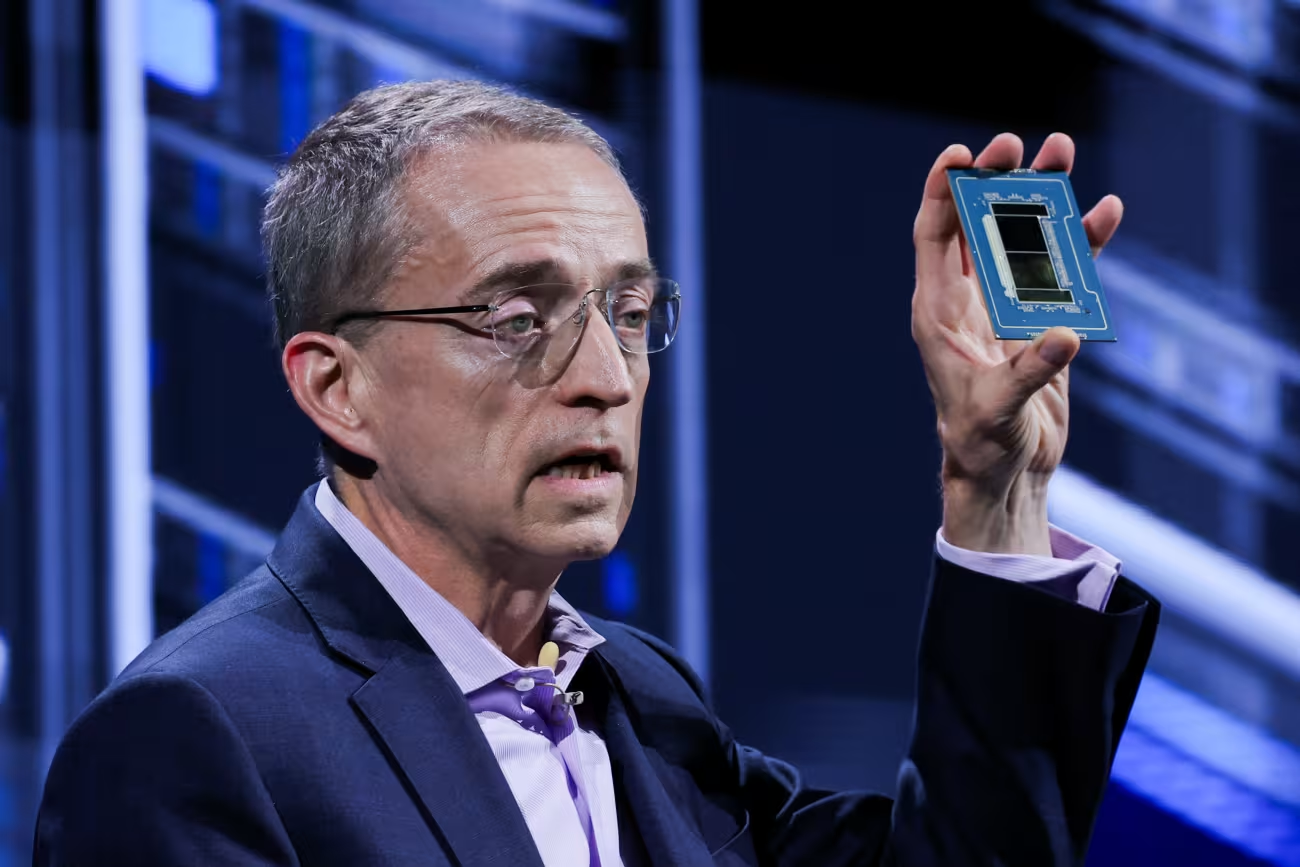
Intel's decision to remove CEO Pat Gelsinger in December 2024 marked a dramatic turning point for one of the most influential companies in the semiconductor industry. After nearly four years attempting to restore Intel's manufacturing leadership, Gelsinger lost the confidence of the company's board of directors, which had become increasingly frustrated with the slow progress of his ambitious turnaround strategy.
His departure was not simply the result of disappointing quarterly earnings. It reflected a deeper crisis involving manufacturing delays, declining competitiveness, expensive fabrication investments, weakening market share and Intel's failure to establish itself as a credible alternative to Taiwan Semiconductor Manufacturing Company (TSMC).
Gelsinger had returned to Intel in 2021 promising to rebuild the company's technological leadership through a strategy known as IDM 2.0. The plan involved expanding domestic semiconductor manufacturing, developing advanced process technologies and transforming Intel into a major contract manufacturer for external customers.
However, the transformation required enormous capital investment before generating meaningful commercial returns. At the same time, Intel faced increasing competition from AMD in processors, Nvidia in artificial intelligence accelerators and TSMC in advanced semiconductor manufacturing.
By late 2024, the financial burden of the strategy had become increasingly difficult to justify. Intel announced major workforce reductions, suspended its dividend and reported substantial quarterly losses. The board eventually concluded that the company needed different leadership to accelerate its recovery.
Nearly two years later, Intel's recovery under CEO Lip-Bu Tan remains incomplete. The company has achieved meaningful revenue growth and improvements in manufacturing, but its foundry business continues to lose money, supply constraints remain significant and its ability to compete with TSMC is still unproven.
Why Did Intel Force Pat Gelsinger Out?
Intel officially announced Gelsinger's retirement on December 2, 2024. However, reporting by Reuters indicated that the board had effectively forced him out after losing confidence in his ability to execute the company's turnaround strategy.
The decision followed growing disagreement over Intel's financial performance, manufacturing roadmap, investment priorities and the pace at which the company could regain technological competitiveness.
Several interconnected problems contributed to the board's frustration.
1. Manufacturing Delays Undermined Intel's Technological Leadership
Intel had historically been one of the world's most advanced semiconductor manufacturers. Its ability to design and manufacture processors internally gave it a significant competitive advantage over companies that depended on external foundries.
That advantage weakened after Intel experienced repeated manufacturing delays during the second half of the 2010s and early 2020s.
Meanwhile, TSMC continued advancing its manufacturing technologies and attracted leading semiconductor designers, including Apple, AMD and Nvidia.
Intel's manufacturing difficulties affected product schedules, production costs and the company's reputation among customers.
Gelsinger attempted to reverse the situation through an aggressive manufacturing roadmap, but the scale of the challenge proved greater than anticipated.
2. The Financial Cost of the Turnaround Became Unsustainable
Gelsinger committed Intel to a massive expansion of semiconductor manufacturing capacity in the United States and Europe.
These investments were strategically important but required substantial capital before the facilities could generate commercial returns.
Intel was simultaneously dealing with declining profitability, weaker demand in some traditional markets and increased competition.
The company's August 2024 restructuring announcement included approximately 15,000 job cuts, significant operating expense reductions and the suspension of its dividend.
Its third-quarter 2024 results also included a net loss of approximately US$16.6 billion, substantially affected by impairment and restructuring charges.
The board increasingly questioned whether Intel could finance its manufacturing ambitions while restoring profitability and protecting its competitive position.
3. Intel Failed to Capture the AI Hardware Boom
The rapid expansion of artificial intelligence created a new competitive environment in the semiconductor industry.
Nvidia emerged as the dominant supplier of GPUs and AI computing platforms, while AMD expanded its accelerator portfolio.
Intel continued investing in AI products, including its Gaudi accelerator family, but failed to establish comparable commercial momentum.
The company remained heavily associated with traditional CPUs at a time when demand for specialized AI processors, high-bandwidth memory and advanced chip packaging was increasing rapidly.
This exposed a weakness in Intel's strategy: regaining manufacturing leadership would not automatically make the company competitive in the fastest-growing semiconductor markets.
Who Is Pat Gelsinger?
Patrick Paul Gelsinger is an American semiconductor engineer and technology executive who spent more than four decades in the technology industry.
He joined Intel in 1979 and became one of the company's most influential engineering leaders.
During his early career, Gelsinger contributed to important processor development projects, including the Intel 80486 generation. He later became Intel's first chief technology officer and held senior engineering and management positions.
After leaving Intel in 2009, he worked at EMC and subsequently became CEO of VMware in 2012.
At VMware, he oversaw the company's expansion in cloud infrastructure, enterprise software and virtualization technologies.
His experience in semiconductor engineering and enterprise technology made him an attractive candidate when Intel began searching for a new CEO in 2021.
Gelsinger returned to Intel in February 2021, succeeding Bob Swan. His appointment initially generated considerable optimism because he was viewed as a technically experienced executive who understood Intel's engineering culture.
Gelsinger's IDM 2.0 Strategy: Rebuilding Intel's Manufacturing Empire
Gelsinger's most important strategic initiative was IDM 2.0, introduced in March 2021.
The strategy sought to modernize Intel's traditional integrated device manufacturer business model while creating a commercial foundry operation capable of serving external semiconductor customers.
Historically, Intel designed and manufactured most of its own processors. This vertically integrated model allowed the company to coordinate chip architecture, process technology and manufacturing capacity.
However, the semiconductor industry had evolved toward greater specialization.
AMD, Nvidia, Apple and Qualcomm increasingly focused on chip design while outsourcing production to specialized manufacturers, particularly TSMC.
Gelsinger believed Intel could compete by combining its traditional manufacturing capabilities with a new foundry business.
The Three Pillars of IDM 2.0
Intel's strategy consisted of three major components.
Internal manufacturing: Intel would continue manufacturing its own processors through its global fabrication network.
External foundry partnerships: Intel would use third-party manufacturers, including TSMC, when external production offered advantages in technology, cost or production capacity.
Intel Foundry Services: Intel would manufacture semiconductor products for external customers, directly competing with established contract manufacturers.
The strategy represented a fundamental transformation of Intel's business model.
Instead of relying primarily on its own processor sales, Intel intended to generate additional revenue by manufacturing chips designed by other companies.
However, this required a major cultural change. Intel had to become a manufacturing partner trusted by customers that might otherwise compete with its own product divisions.
The Five Nodes in Four Years: An Ambitious Manufacturing Roadmap
One of Gelsinger's most ambitious commitments was to introduce five semiconductor process technologies within approximately four years.
The roadmap included:
- Intel 7: An evolution of the company's 10nm manufacturing technology.
- Intel 4: A major transition incorporating extreme ultraviolet lithography.
- Intel 3: An optimized process designed for higher performance and efficiency.
- Intel 20A: A major architectural transition introducing RibbonFET gate-all-around transistors and PowerVia backside power delivery.
- Intel 18A: A next-generation manufacturing technology designed to restore Intel's competitiveness in advanced semiconductor production.
The roadmap was intended to demonstrate that Intel could once again execute rapid manufacturing innovation.
Some milestones were achieved, including the introduction of Intel 4 and Intel 3 products. However, Intel 20A was eventually deprioritized as resources shifted toward Intel 18A.
The aggressive schedule also increased pressure on engineering teams, manufacturing operations and capital allocation.
The lesson was that a technically ambitious roadmap is not necessarily commercially successful unless production yields, costs, customer demand and delivery schedules are competitive.
Why Building Semiconductor Factories Became a Financial Burden
Advanced semiconductor fabrication facilities are among the most expensive industrial investments in the world.
They require highly specialized cleanrooms, extreme ultraviolet lithography equipment, advanced chemical processing systems, sophisticated automation and extensive engineering infrastructure.
Building a modern fab can require tens of billions of dollars, while achieving commercially competitive production yields can take years.
Intel's expansion strategy included major investments in several locations.
Ohio Semiconductor Manufacturing Project
In 2022, Intel announced plans to invest approximately US$20 billion initially in two advanced fabrication plants near New Albany, Ohio.
The longer-term vision was to develop the location into one of the world's largest semiconductor manufacturing complexes.
The project was important to the United States because it was expected to strengthen domestic semiconductor production and reduce dependence on East Asian manufacturing.
However, construction schedules were subsequently adjusted as Intel reassessed capital expenditure and market conditions.
The delays demonstrated the difficulty of maintaining a massive manufacturing expansion while the company was experiencing declining financial performance.
Arizona Manufacturing Expansion
Intel also invested heavily in Arizona, where it operates major semiconductor manufacturing facilities.
The location became particularly important for Intel's advanced process technology roadmap and its efforts to expand domestic manufacturing capacity.
Arizona also received substantial attention under the U.S. CHIPS and Science Act, which was designed to strengthen domestic semiconductor manufacturing.
New Mexico and Advanced Packaging
Intel expanded its New Mexico operations to support advanced semiconductor packaging.
Advanced packaging is becoming increasingly important because modern processors and AI accelerators often combine multiple semiconductor dies into a single integrated package.
Intel's Foveros and EMIB technologies were developed to support these complex packaging architectures.
These capabilities represent an important part of Intel's potential competitive advantage, although the company must still demonstrate commercial scale and profitability.
Intel Foundry vs. TSMC: Why the Competition Was So Difficult
Intel Foundry was arguably the most strategically important and financially challenging component of Gelsinger's turnaround strategy.
TSMC had spent decades building a business model based on manufacturing semiconductors for external customers.
Its customers included many of the world's most valuable technology companies, giving it enormous production volumes and strong economies of scale.
Intel, by comparison, was attempting to establish a foundry business while simultaneously competing with many of its prospective customers in the processor market.
TSMC's Pure-Play Foundry Advantage
TSMC operates primarily as a pure-play semiconductor foundry.
It does not compete directly with its customers by selling branded PC or server processors in the same way Intel does.
This business model allows semiconductor designers to share sensitive manufacturing information without facing the same competitive concerns associated with vertically integrated manufacturers.
It also allows TSMC to concentrate its resources on manufacturing process development, production efficiency and customer requirements.
Intel's Conflict Between Foundry and Product Businesses
Intel faced a more complicated organizational structure.
Its internal product divisions needed manufacturing capacity and competitive production costs, while Intel Foundry needed to attract external customers and demonstrate independent commercial performance.
These objectives could sometimes conflict.
External customers needed confidence that Intel would treat them fairly, protect their intellectual property and prioritize their production requirements.
Intel therefore had to demonstrate not only technological competence but also organizational independence and commercial reliability.
Manufacturing Yield and Cost Competitiveness
In advanced semiconductor production, manufacturing yield is one of the most important economic variables.
Yield measures the proportion of manufactured chips that meet required performance and quality specifications.
Low yields increase production costs because more wafers and manufacturing resources are required to deliver the same number of usable chips.
Even a technically advanced process can be commercially unattractive if its production costs are substantially higher than those of competing foundries.
Intel's ability to achieve high yields on Intel 18A and future process nodes therefore remains central to its foundry strategy.
How Intel Lost the Artificial Intelligence Market to Nvidia
Intel's manufacturing difficulties coincided with one of the biggest technological shifts in modern computing: the expansion of artificial intelligence.
For decades, Intel's dominance was closely associated with x86 CPUs used in personal computers and data centers.
However, large-scale AI training and inference require massive parallel computing capabilities, creating exceptional demand for GPUs and specialized accelerators.
Nvidia was particularly well positioned because it combined powerful hardware with CUDA, a mature software ecosystem used by AI developers and researchers.
This combination created a significant competitive advantage that was difficult for rivals to reproduce.
AMD expanded its Instinct accelerator family, while Intel developed its Gaudi AI processors.
Nevertheless, Intel struggled to build the same level of commercial adoption and developer ecosystem as Nvidia.
The AI transition also increased demand for high-bandwidth memory, advanced packaging and specialized manufacturing capacity.
Consequently, Intel faced a challenge across several interconnected technologies rather than simply needing to design a faster processor.
Intel's Financial Crisis in 2024
Intel's financial problems became increasingly visible during 2024.
In August, the company announced a major restructuring program that included approximately 15,000 job reductions and substantial operating cost savings.
It also suspended its dividend to preserve cash and support the company's investment requirements.
The third-quarter results were particularly damaging.
Intel reported approximately US$16.6 billion in net losses, largely reflecting significant non-cash impairment charges and restructuring costs.
Although the reported loss did not represent an equivalent amount of cash leaving the company, it highlighted the financial consequences of Intel's manufacturing reassessment and deteriorating business conditions.
Investors also became increasingly concerned about the company's ability to generate sufficient free cash flow while continuing its manufacturing expansion.
The stock experienced a substantial decline during 2024, reflecting declining confidence in Gelsinger's turnaround strategy.
December 2024: The Board Decides to Replace Gelsinger
On December 1, 2024, Gelsinger stepped down as Intel's CEO and left the board of directors.
Intel announced his retirement publicly on December 2.
Reuters reported that the board had lost confidence in the pace of the turnaround and that Gelsinger was effectively given the choice of retiring or being removed.
Intel appointed CFO David Zinsner and senior executive Michelle Johnston Holthaus as interim co-CEOs.
Frank Yeary assumed the role of interim executive chairman while the board searched for a permanent replacement.
The leadership change reflected a shift in priorities. Intel needed to improve its financial position, simplify operations and establish a more credible path toward manufacturing profitability.
Lip-Bu Tan: The Executive Chosen to Rebuild Intel
In March 2025, Intel appointed Lip-Bu Tan as its new chief executive officer, effective March 18.
Tan brought a different background from Gelsinger.
He had served as CEO of Cadence Design Systems from 2009 to 2021, transforming it into a major semiconductor design software company.
He also had extensive experience in venture capital and semiconductor investment through his involvement with Walden International.
His appointment signaled a greater emphasis on financial discipline, operational efficiency and customer-oriented execution.
Tan inherited a company with valuable manufacturing assets, established processor products and significant government support, but also considerable financial and technological problems.
How Lip-Bu Tan Changed Intel's Strategy
Tan's approach focused on making Intel financially and operationally sustainable rather than pursuing manufacturing expansion at any cost.
Reducing Operating Costs
Intel continued reducing its workforce and operating expenses to simplify the organization and improve efficiency.
The objective was to direct more resources toward core products, manufacturing technology and areas with clearer commercial demand.
Capital Discipline
Tan emphasized that Intel should expand manufacturing capacity according to customer demand and realistic financial returns.
This represented a change from the earlier approach, which involved building extensive manufacturing capacity in anticipation of future foundry customers.
Intel's own 2026 SEC filing confirms that further development and manufacturing expansion of Intel 14A would be guided by committed demand from internal products and external customer design wins.
Restoring Customer Confidence
Winning external foundry customers requires predictable manufacturing performance, competitive costs and long-term confidence.
Tan's commercial background was considered valuable because Intel needed to build relationships with major semiconductor designers and demonstrate that its manufacturing operations could deliver reliably.
Strengthening Data-Center and AI Products
Intel also focused on improving its Xeon server processors and developing customized silicon for cloud and AI infrastructure customers.
These products represent a significant opportunity because AI infrastructure requires more than GPUs. It also depends on CPUs, networking, memory systems and advanced packaging.
Intel's Position in November 2026: A Recovery With Significant Problems Remaining
By November 2026, Intel had achieved substantial revenue growth compared with the previous year, but its recovery remained uneven.
The company's third-quarter results, released on October 29, 2026, showed revenue of US$16.5 billion, an increase of approximately 21% year over year.
Its data-center and AI business was the strongest growth driver.
However, the company also faced a weakening PC market, shortages of critical manufacturing components and an inability to meet all customer demand for certain server processors.
Third-Quarter 2026 Financial Results
| Financial indicator | Q3 2026 result |
|---|---|
| Total revenue | US$16.5 billion |
| Data Center and AI revenue | US$7.3 billion |
| Data Center and AI year-over-year growth | 78% |
| Intel Foundry reported revenue | US$6.7 billion |
| Intel Foundry external revenue | US$411 million |
| Intel Foundry operating loss | US$1.9 billion |
| GAAP net income | US$3.3 billion |
One important accounting distinction concerns Intel Foundry revenue.
The reported US$6.7 billion includes approximately US$6.3 billion in intersegment transactions, meaning manufacturing and related services provided to Intel's own product divisions.
External customer revenue was only US$411 million.
This distinction is essential because it demonstrates that Intel Foundry's large reported revenue does not yet represent a commercially mature external foundry business comparable with TSMC.
The division also reported an operating loss of approximately US$1.9 billion for the quarter, although this represented an improvement compared with the previous year.
Why Intel Cannot Meet All Demand for AI Server Processors
One of the more surprising developments in 2026 is that Intel is facing supply shortages even as its manufacturing recovery remains incomplete.
Demand for Xeon server processors increased significantly as hyperscale cloud providers expanded their AI infrastructure.
Intel reported that certain data-center customers wanted more processors than the company could deliver.
The problem was not simply a shortage of wafer production capacity.
Advanced semiconductor manufacturing depends on a complex supply chain involving substrates, memory, packaging materials and specialized components.
Shortages in any of these areas can prevent a manufacturer from delivering completed processors even when sufficient wafer capacity is available.
Intel's third-quarter 2026 SEC filing identified industry-wide shortages of substrates, memory and other critical components as factors affecting production and customer demand.
The company also reported that high memory prices were weakening demand in the more price-sensitive PC market.
This created a difficult situation: strong server demand was constrained by insufficient supply, while consumer PC demand was weakened by rising component costs.
Intel's Manufacturing Roadmap: 18A and 14A
Intel 18A became one of the most important technologies in the company's recovery strategy.
At the beginning of 2026, Intel released its first products manufactured using Intel 18A in high-volume production.
The process incorporates RibbonFET gate-all-around transistors and PowerVia backside power delivery.
These technologies are intended to improve transistor performance, power efficiency and manufacturing density.
Intel has also continued developing Intel 18A-P, a derivative technology designed for future internal products and external foundry customers.
In June 2026, the company entered risk production for products using 18A-P.
Beyond 18A, Intel is developing Intel 14A as its next major manufacturing generation.
However, Intel's 2026 filing makes an important point: the scale and pace of 14A manufacturing expansion will depend on obtaining sufficient committed customer demand.
This reflects a more commercially disciplined approach than building capacity without firm customer commitments.
Intel Foundry's Biggest Challenge: Winning External Customers
Despite its technological investments, Intel has not yet established a large external foundry customer base.
Its 2026 third-quarter financial disclosures show that external foundry revenue remained relatively small compared with internal manufacturing transactions.
Intel's foundry business therefore remains heavily dependent on manufacturing products designed by Intel itself.
This is a major distinction from TSMC, whose business is built around manufacturing semiconductors for independent customers.
Why Customers Choose TSMC
TSMC offers manufacturing scale, extensive process experience, mature production yields and an established customer ecosystem.
Its position is reinforced by years of collaboration with major semiconductor designers.
Customers can develop products knowing that TSMC has extensive experience producing advanced chips at commercial scale.
What Intel Must Prove
Intel must demonstrate that its manufacturing technologies can deliver:
- Competitive production yields.
- Predictable manufacturing schedules.
- Competitive wafer and packaging costs.
- Reliable supply capacity.
- Strong intellectual property protection.
- Long-term manufacturing support for external customers.
These requirements are just as important as technological specifications.
Intel's future as a commercial foundry will depend on whether customers are willing to commit large production volumes rather than merely evaluate its technologies.
The Strategic Importance of Intel to the United States
Intel's position extends beyond the commercial semiconductor market.
The company is a strategically important American manufacturer with advanced research, design and production capabilities.
Global semiconductor production is heavily concentrated in East Asia, particularly Taiwan and South Korea.
This creates supply-chain vulnerabilities for the United States, especially in advanced logic chips used in data centers, defense systems, telecommunications and artificial intelligence.
Intel therefore became a central component of Washington's efforts to rebuild domestic semiconductor manufacturing capacity.
The CHIPS and Science Act
The U.S. CHIPS and Science Act was designed to encourage domestic semiconductor production through grants, loans, tax incentives and research support.
Intel was one of the largest potential beneficiaries because of its planned manufacturing investments in Arizona, Ohio and other locations.
In November 2024, Intel finalized a US$7.86 billion direct funding award under the CHIPS program to support eligible domestic manufacturing projects.
The government support was intended to reduce the financial risks of establishing advanced manufacturing facilities in the United States.
The U.S. Government's Equity Investment in Intel
In August 2025, the Trump administration and Intel announced an agreement under which the U.S. government would acquire an approximately 9.9% equity stake in the company.
The transaction converted previously allocated government support into an equity investment, making the federal government a major Intel shareholder.
The arrangement reflected the strategic importance of maintaining domestic semiconductor manufacturing capacity.
However, government investment cannot substitute for commercial competitiveness. Intel still needs to develop competitive products, achieve profitable manufacturing yields and win customers.
Intel's Latest Setback: Weak PC Demand and Manufacturing Supply Constraints
Intel's third-quarter 2026 results demonstrated strong growth in data-center revenue, but the outlook for the following quarter disappointed investors.
The company projected fourth-quarter revenue between US$15 billion and US$16 billion, below the approximately US$17 billion expected by Wall Street analysts.
Following the announcement, Intel shares experienced a sharp decline.
Several factors contributed to the weaker outlook.
Higher Memory Prices
Rising memory prices increased the cost of producing personal computers.
Higher system prices weakened demand, particularly among consumers and businesses with limited IT budgets.
Server Processor Supply Constraints
Intel reported strong demand for data-center processors but could not fully satisfy customer orders.
The company was working to increase production capacity and secure supplies of critical components.
Manufacturing Disruption in Israel
An accident at Intel's Kiryat Gat facility in Israel in October 2026 resulted in employee casualties and injuries and temporarily halted manufacturing operations.
Intel's SEC filing stated that the shutdown lasted approximately two weeks and was expected to affect production costs, gross profit and operating results into the first half of 2027.
The company had not yet established the full financial impact or potential insurance recoveries when it filed its third-quarter report.
The incident illustrated how manufacturing concentration and unexpected operational disruptions can affect semiconductor supply chains.
Can Intel Recover Against TSMC, AMD and Nvidia?
Intel's long-term recovery depends on three major competitive challenges.
1. Competing With TSMC in Advanced Manufacturing
Intel must demonstrate that Intel 18A and future 14A technologies can compete commercially with TSMC's advanced manufacturing processes.
Technical progress alone is insufficient. Intel must also achieve attractive production yields, competitive costs and reliable delivery schedules.
Winning major external customers would be a decisive milestone for the company's foundry ambitions.
2. Regaining CPU Leadership Against AMD
AMD has gained market share through its Ryzen and EPYC processor families.
Its use of TSMC manufacturing technology has allowed it to compete effectively in desktop, laptop and server markets.
Intel must continue improving processor architecture, energy efficiency, platform integration and manufacturing availability.
The company's recent increase in Xeon demand demonstrates that its server processor business remains strategically important, but it must be able to deliver enough products to capture the opportunity.
3. Building a Stronger AI Computing Business
Nvidia's dominance in AI accelerators has transformed the semiconductor market.
Intel does not necessarily need to replicate Nvidia's entire business model, but it must establish competitive positions in CPUs, customized silicon, advanced packaging, networking and AI infrastructure.
These markets are increasingly interconnected, and success will depend on delivering complete solutions rather than individual processor products.
What Pat Gelsinger's Departure Reveals About Intel's Management Crisis
Gelsinger's departure exposed a deeper organizational challenge at Intel: the difficulty of balancing technological ambition, manufacturing execution and financial discipline.
His IDM 2.0 strategy was not without achievements. Intel invested in advanced manufacturing, expanded its foundry ambitions and made progress on important process technologies.
However, the company struggled to convert those investments into sustainable commercial returns within the time frame expected by its board and investors.
His successor, Lip-Bu Tan, adopted a more selective approach to capital allocation and emphasized customer commitments and operational performance.
The transition also demonstrated that Intel's problems were not solely the responsibility of one CEO. Manufacturing delays, organizational complexity, competitive pressure and strategic mistakes had accumulated over many years.
Replacing the CEO could change priorities, but it could not immediately eliminate the underlying technological and financial challenges.
Conclusion: Intel's Turnaround Is Far From Complete
Pat Gelsinger's departure in December 2024 marked the end of an ambitious attempt to restore Intel's manufacturing leadership through massive investment and the IDM 2.0 strategy.
The board's decision reflected frustration with manufacturing delays, financial deterioration and the slow commercial progress of Intel Foundry.
Gelsinger's vision sought to transform Intel into both a leading semiconductor designer and a global contract manufacturer. However, the company struggled to compete with TSMC's manufacturing scale, AMD's processor advances and Nvidia's dominance in AI computing.
Under Lip-Bu Tan, Intel has shifted toward greater capital discipline, stronger product execution and manufacturing expansion linked more closely to customer demand.
Its third-quarter 2026 results show that the company is capable of generating substantial revenue growth, particularly from data-center and AI products. Nevertheless, the small amount of external Intel Foundry revenue and its continuing operating losses reveal how far the company remains from achieving its commercial foundry ambitions.
Intel's future will depend on whether it can convert technological investment into profitable manufacturing, regain confidence among external customers and strengthen its position in the rapidly expanding AI semiconductor ecosystem.
Ultimately, the removal of Pat Gelsinger was not the end of Intel's crisis. It was the beginning of a different attempt to solve a problem that had developed over more than a decade.
```
- Log in to post comments