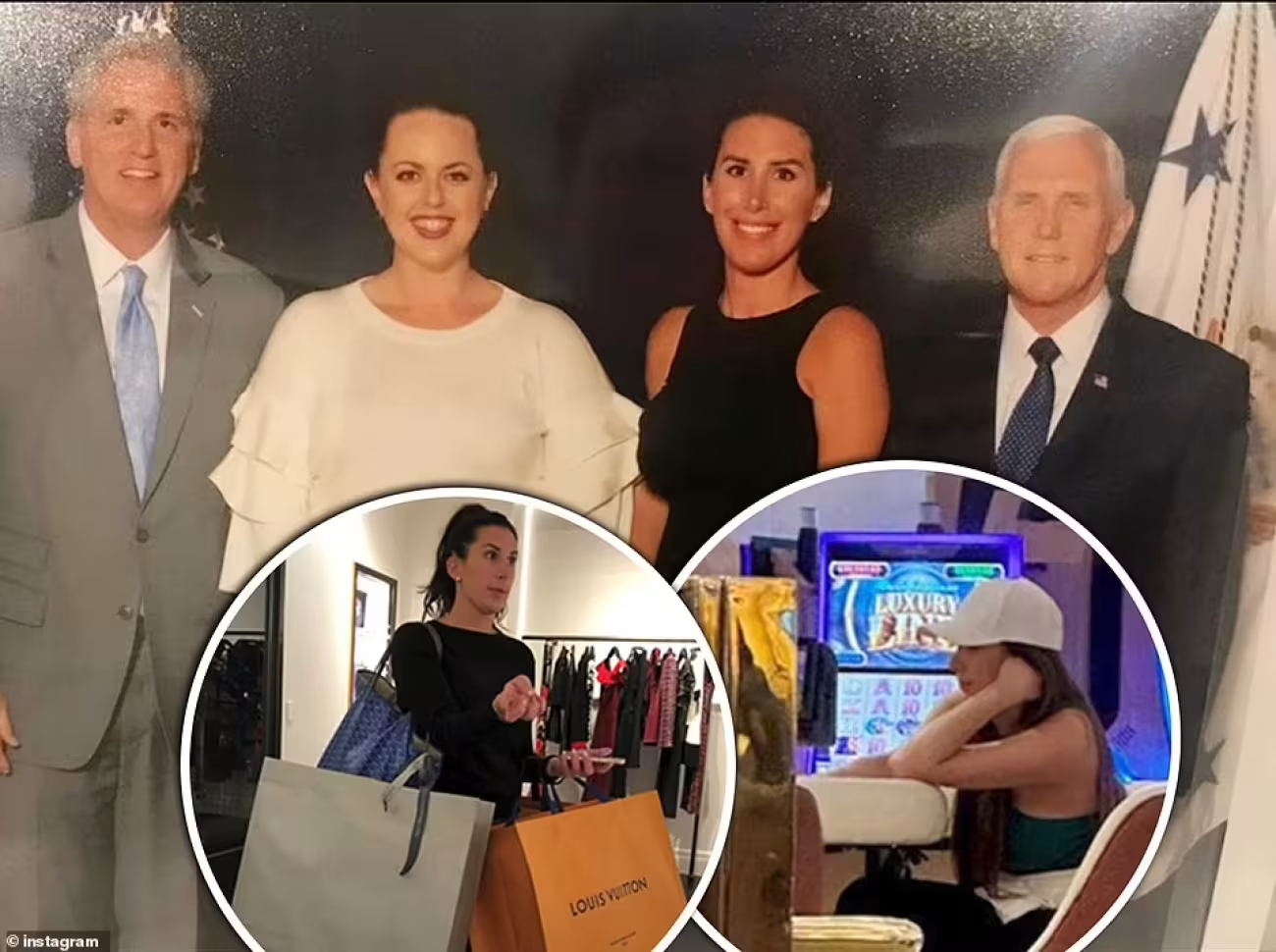
Sara Jacqueline King, a former Newport Beach attorney known as "Lady Mafia," became the central figure in one of California's more extraordinary financial fraud cases after admitting that she deceived investors into believing they were financing lucrative short-term loans to celebrities, professional athletes and wealthy individuals. Instead of funding the promised transactions, King diverted millions of dollars into Las Vegas casinos, luxury accommodation, personal purchases and an extravagant lifestyle.
Operating through her company, King Family Lending LLC, she claimed to arrange high-interest loans secured by valuable collateral, including luxury watches, designer handbags, expensive automobiles, yachts and professional athletes' guaranteed contract earnings. Investors were promised that their money would be protected by the same assets supposedly pledged by borrowers.
Federal prosecutors established that the promised lending operations never took place. Between January 2022 and January 2023, King used investor funds for personal purposes, causing five investors to lose more than $8 million. She ultimately agreed to pay $8,785,045 in restitution after pleading guilty to wire fraud and money laundering.
On May 5, 2025, U.S. District Judge David O. Carter sentenced King to 21 months in federal prison, followed by three years of supervised release. She was also ordered to repay the victims. The California State Bar subsequently disbarred her, ending her legal career.
The case attracted widespread attention because of the contrast between King's professional identity as an attorney, her promises of exclusive access to wealthy borrowers and the actual destination of the money she collected. It also exposed how professional credibility, fabricated financial documentation and the appearance of luxury can be used to persuade investors to trust an investment opportunity without independently verifying its underlying assets.
1. Who Is Sara Jacqueline King?
Sara Jacqueline King is a former California attorney who practiced in Newport Beach, Orange County. She became publicly known after federal investigators uncovered a multimillion-dollar fraud scheme involving her private lending business, King Family Lending LLC.
Before the criminal case, King presented herself as a lawyer and financial entrepreneur capable of arranging specialized loans for wealthy clients.
Her business claimed to operate in a market where professional athletes, celebrities and high-net-worth individuals could obtain short-term financing by using luxury possessions and other valuable assets as collateral.
This business model gave investors the impression that they were participating in a specialized lending operation with relatively attractive returns and tangible security.
However, the criminal investigation revealed that the loans described to investors were not actually being made.
Her Professional Background
King was admitted to the State Bar of California on December 2, 2014, under attorney registration number 299115.
She operated in Newport Beach and was associated with King Reuben, P.C., according to her official attorney registration profile.
Her legal qualifications were an important part of the credibility she presented to potential investors. For people unfamiliar with private lending, working with an attorney could create an impression that transactions were professionally managed and legally protected.
That credibility became central to the deception described in the federal criminal case.
2. King Family Lending: The Business Behind the Fraud
King Family Lending LLC was established as a private lending business that purportedly provided short-term, high-interest loans to wealthy borrowers.
The company's business model was built around asset-backed financing. Instead of relying exclusively on conventional credit assessments, the company claimed that loans were secured by valuable personal property or other financial assets belonging to borrowers.
Examples of the supposed collateral included:
- Luxury watches and jewelry.
- Designer handbags.
- High-end automobiles.
- Yachts and other luxury assets.
- Antique coins and collectibles.
- Guaranteed earnings from professional sports contracts.
King presented the lending operation as an opportunity to generate attractive returns from short-term financing arrangements involving wealthy clients who needed immediate liquidity.
How the Investment Proposition Worked
King approached investors and asked them to provide money that would supposedly be used to finance loans.
She explained that investors would receive their original capital back together with an agreed share of the interest generated by the borrowers.
Her business would retain a portion of the interest as compensation for arranging and administering the transactions.
The most important selling point was the collateral.
King told investors that the assets securing the underlying loans would also protect their investments. If a borrower defaulted, the collateral could supposedly be sold to recover the outstanding amount.
This arrangement created the impression that investors were participating in secured lending rather than taking unsecured exposure to a small private business.
3. The Investment Fraud: The Loans Never Existed
The central deception was eventually established through King's guilty plea.
According to the U.S. Department of Justice, King never initiated or funded any of the loans she had represented to investors as the purpose of their investments.
The supposed borrowers, financing transactions and collateral arrangements were part of a false investment proposition.
Investors believed their money was supporting specific lending transactions, but the funds were instead used for gambling and personal expenses.
How King Built Trust With Investors
The scheme relied on several elements that made the business appear legitimate.
- Professional credibility: King presented herself as an attorney with the knowledge and experience to structure financial transactions.
- Exclusive borrowers: She claimed to have access to celebrities, professional athletes and wealthy individuals.
- High-value collateral: Luxury vehicles, watches, handbags and other assets created an impression of tangible security.
- Attractive returns: Short-term, high-interest loans were presented as opportunities to generate substantial investment income.
- Financial documentation: Investors were provided with documents that purported to support the lending arrangements.
The combination made the opportunity appear more sophisticated than an ordinary personal investment solicitation.
However, the underlying transactions were not real.
4. The Famous Athletes and Luxury Assets Used to Sell the Story
One of the most striking aspects of the case was the alleged use of celebrity associations to strengthen the credibility of King's lending business.
In a separate civil lawsuit filed by LDR International Limited, the British Virgin Islands-based lender alleged that King used photographs of herself with prominent NFL quarterbacks, including Tom Brady, Aaron Rodgers and Patrick Mahomes, to demonstrate her access to wealthy sports figures.
The lawsuit also described allegedly fabricated loan documentation and collateral arrangements.
These allegations must be distinguished from the federal criminal admissions. The Justice Department's criminal case established that King never funded the promised loans, while the more detailed claims about specific photographs and lending documents appeared in the civil litigation.
Why Celebrity Connections Matter in Investment Fraud
Associations with famous individuals can create an impression of exclusivity.
Investors may assume that a business connected to professional athletes or celebrities has access to opportunities unavailable to ordinary financial institutions.
However, photographs with famous people do not establish a business relationship, endorsement, loan agreement or investment partnership.
The distinction between social proximity and actual commercial authorization is particularly important when evaluating private investment opportunities.
5. Five Investors Lost More Than $8 Million
According to the Department of Justice, King admitted that five investors lost more than $8 million through the scheme.
The applicable restitution amount was established at $8,785,045.
The case also involved a separate civil claim brought by LDR International Limited, which alleged that it had provided approximately $10.2 million through 97 loans to King Lending between January and October 2022.
These figures refer to different legal contexts and should not be treated as identical:
| Financial figure | Meaning |
|---|---|
| More than $8 million | Losses acknowledged in the federal criminal case involving five investors. |
| $8,785,045 | Restitution amount agreed to in the criminal plea agreement. |
| Approximately $10.2 million | Amount claimed in the separate civil litigation brought by LDR International. |
| $132,156 | Investor funds King admitted withdrawing to purchase a Porsche Taycan. |
The distinction matters because the criminal restitution amount and the broader civil claims do not necessarily measure the same financial exposure.
6. Where Did the Money Go? The Las Vegas Gambling Spree
Rather than financing short-term loans, King used investor money to support a lifestyle centered on luxury spending and gambling in Las Vegas.
According to prosecutors, she spent substantial amounts at casinos and used the funds for personal expenses.
The Wynn Las Vegas resort became particularly associated with the case because civil allegations and sentencing reports described King staying there for an extended period.
Living at Wynn Las Vegas
According to the civil lawsuit filed by LDR International, King moved into the Wynn Las Vegas resort and hotel, where she allegedly stayed for approximately six months.
The lawsuit described her gambling as taking place around the clock.
The Los Angeles Times reported that the lender alleged King had spent most of the money it provided to King Lending on gambling, an extravagant lifestyle and personal expenses.
These details illustrate the contrast between the business presented to investors and the way the funds were actually used.
The Porsche Taycan Purchase
One particularly documented personal purchase involved a Porsche Taycan electric sports car.
According to the Department of Justice, King admitted withdrawing approximately $132,156 from King Family Lending's bank account to purchase the vehicle.
The purchase was significant because the money came from funds that investors believed would finance secured lending transactions.
Millions Lost at Casinos
At her sentencing hearing, prosecutors described the enormous amount of money that had been lost through gambling.
The defense also discussed King's gambling addiction and substance-use problems as contributing factors.
Her lawyer argued that she had entered rehabilitation and was attempting to rebuild her life.
However, the court had to consider the financial harm suffered by the victims and the deliberate nature of the fraudulent business operation.
7. How the Fraud Was Exposed
The scheme eventually collapsed as financial claims and investor concerns developed into legal action.
One of the important parties in uncovering the broader allegations was LDR International Limited, which filed a civil lawsuit against King and her lending business.
The lawsuit alleged that King had misrepresented loans, fabricated documentation and diverted money intended for financing transactions.
The civil proceedings brought attention to the discrepancy between the amounts supposedly being lent and the actual use of the funds.
The Role of Financial Records
Financial investigations are particularly important in private lending fraud because they can establish whether money was actually used for its stated purpose.
Investigators can compare:
- Investor deposits and withdrawals.
- Bank statements and payment records.
- Loan agreements and borrower identities.
- Collateral records and ownership documents.
- Casino transactions and personal expenditures.
- Communications between the business and investors.
In King's case, her admissions ultimately established that the promised loans were never funded.
Federal Investigators Become Involved
The Federal Bureau of Investigation and the Internal Revenue Service's Criminal Investigation division investigated the criminal case.
The investigation led to federal charges involving wire fraud and money laundering.
King subsequently agreed to plead guilty, providing the government with a formal admission of the offenses.
8. June 2023: Sara King Agrees to Plead Guilty
On June 13, 2023, the U.S. Department of Justice announced that King had agreed to plead guilty to federal charges of wire fraud and money laundering.
The case was handled by the U.S. Attorney's Office for the Central District of California.
The two-count criminal information and related plea agreement were filed in federal court in Santa Ana.
The charges reflected the use of electronic communications and financial transactions to carry out the fraudulent operation and move the proceeds.
Understanding the Two Federal Charges
Wire fraud involves using interstate or international electronic communications to execute a fraudulent scheme.
Examples can include electronic transfers, emails and other communications used to obtain money through materially false representations.
Money laundering involves financial transactions involving proceeds of specified unlawful activity, with the relevant criminal intent and statutory elements established under federal law.
In King's case, the charges reflected the financial deception and movement of investor money through her business and personal spending.
9. July 24, 2023: The Guilty Plea
King formally pleaded guilty to wire fraud and money laundering on July 24, 2023.
Her admission established that she had deceived investors about the purpose of their money and used the funds for purposes unrelated to the promised lending transactions.
The guilty plea also established her agreement to the restitution amount of $8,785,045.
At that stage, she faced the possibility of a substantially longer federal sentence than the punishment ultimately imposed.
10. The Lady Mafia Podcast Controversy
The case attracted additional attention when King appeared on the podcast Lady Mafia to discuss her crimes before sentencing.
The appearance became an issue during the May 2025 sentencing hearing.
Assistant U.S. Attorney Jennifer Waier criticized the way King had discussed and presented her criminal conduct publicly.
The prosecution argued that she had sensationalized the case and had failed to disclose the podcast appearance to probation officials.
The criticism raised questions about how a defendant should discuss a criminal conviction publicly while awaiting sentencing.
It also contributed to the media attention surrounding King's public identity as "Lady Mafia."
11. May 5, 2025: Sara King Receives a Federal Prison Sentence
On May 5, 2025, U.S. District Judge David O. Carter sentenced King to 21 months in federal prison.
The sentence followed her guilty plea to wire fraud and money laundering.
The court also ordered her to pay $8,785,045 in restitution and imposed three years of supervised release following her imprisonment.
Why the Judge Rejected the Request for a Shorter Sentence
King's defense attorney, Sam Cross, requested a significantly shorter prison term, arguing that she had suffered from addiction and was caught in a destructive cycle involving gambling, alcohol and Xanax.
The defense also highlighted her participation in rehabilitation and her attempts to find employment after the criminal case began.
However, Assistant U.S. Attorney Jennifer Waier argued that the scale of the fraud, the number of victims and King's professional position justified a more substantial sentence.
Judge Carter recognized the magnitude of the financial losses and expressed concern about the betrayal involved.
He rejected the defense's request for a six-month sentence and imposed 21 months behind bars.
Sentence Summary
| Legal consequence | Outcome |
|---|---|
| Wire fraud | Guilty plea |
| Money laundering | Guilty plea |
| Federal prison | 21 months |
| Restitution | $8,785,045 |
| Supervised release | 3 years |
| Prison reporting deadline | July 14, 2025 |
12. Sara King's California Law License Was Revoked
The criminal conviction also ended King's ability to practice law in California.
Her attorney registration initially became ineligible for practice following the criminal proceedings.
According to the official State Bar of California attorney database, Sara J. King, registration number 299115, was formally disbarred effective December 31, 2025.
The State Bar's official profile now identifies her license status as Disbarred.
This means she is prohibited from practicing law in California.
Why Disbarment Was Significant
Attorneys occupy positions of professional trust because clients and members of the public rely on their legal knowledge, ethical obligations and fiduciary responsibilities.
When an attorney commits serious financial crimes, the consequences can extend beyond criminal punishment.
Professional disciplinary authorities may determine that the individual's conduct makes them unfit to continue practicing law.
In King's case, the disbarment represented the permanent loss of her professional standing in California's legal profession, subject to any applicable future legal procedures.
13. What Happened to the Victims?
The five investors identified in the federal criminal case suffered losses exceeding $8 million.
The restitution order was intended to compensate victims for the financial damage caused by the fraud.
However, a restitution judgment does not automatically mean that all the money will be recovered.
Recovery depends on the availability of assets, enforcement proceedings and the financial circumstances of the defendant.
The separate civil lawsuit by LDR International also highlighted the broader commercial consequences of the alleged lending operation.
For investors, the case demonstrated that even seemingly sophisticated private financing arrangements can conceal fundamental problems when the underlying borrowers, collateral and loan transactions cannot be independently verified.
14. How to Recognize a Private Lending Investment Scam
The Sara King case provides several practical lessons for investors evaluating private lending opportunities.
Verify Every Borrower
Investors should independently establish that the borrower exists, has entered into a genuine loan agreement and has authorized the use of their assets as collateral.
Claims involving celebrities or professional athletes should be independently verified rather than accepted based on photographs or personal introductions.
Confirm That Collateral Actually Exists
Luxury assets can be used to create an appearance of security.
Investors should obtain independent valuation reports, ownership documents, lien searches and confirmation of where the collateral is held.
A photograph of a luxury vehicle or watch is not proof that the business owns or controls the asset.
Use Independent Custody and Escrow
Where an investment depends on collateral, independent custodians and regulated escrow arrangements can help reduce the risk of funds or assets being misappropriated.
Investors should avoid relying exclusively on the person soliciting the investment to hold money, manage documents and verify collateral.
Understand Where the Money Goes
Investors should demand clear records showing the movement of capital from their account to the actual borrower or lending transaction.
Independent audits and bank confirmations can help establish whether funds are being used for their stated purpose.
Be Suspicious of Guaranteed High Returns
Short-term loans promising unusually high interest rates may involve substantial credit, liquidity and collateral risks.
Returns should be assessed against the borrower's actual creditworthiness, the quality of security and the legal enforceability of the loan agreement.
15. Sara King and the Broader Problem of White-Collar Financial Crime
The case illustrates a particular form of white-collar crime in which professional credibility becomes an instrument for financial deception.
Unlike conventional investment fraud involving an unknown promoter, King's position as a licensed attorney gave her business an appearance of legal and financial sophistication.
Investors were not simply being offered an ordinary speculative product. They were told that their money was financing transactions secured by identifiable high-value assets.
The fraud therefore depended on a combination of professional trust, claimed access to wealthy clients, fabricated lending activity and promises of asset-backed security.
The case also demonstrates that financial fraud can continue for an extended period when investors lack independent access to the underlying transactions.
Regulatory status, professional credentials and impressive business presentations are not substitutes for independent verification.
16. Timeline of the Sara King Fraud Case
| Date | Event |
|---|---|
| December 2, 2014 | Sara King is admitted to the State Bar of California. |
| January 2022 | King begins recruiting investors through King Family Lending. |
| 2022 | Investors provide millions of dollars for supposedly secured lending transactions. |
| January 2023 | The period covered by the federal criminal scheme concludes. |
| February 22, 2023 | The Los Angeles Times reports on LDR International's civil lawsuit alleging a multimillion-dollar fraud. |
| June 13, 2023 | The U.S. Department of Justice announces King's agreement to plead guilty. |
| July 24, 2023 | King formally pleads guilty to wire fraud and money laundering. |
| October 16, 2023 | Her California law license becomes ineligible for practice following the conviction-related suspension. |
| May 5, 2025 | King is sentenced to 21 months in federal prison and ordered to pay $8,785,045 in restitution. |
| July 14, 2025 | Deadline set for King to report to federal prison. |
| December 31, 2025 | California State Bar records her formal disbarment. |
| November 2026 | Her official California attorney profile continues to show Disbarred status. |
Frequently Asked Questions About Sara King
Who is Sara Jacqueline King?
Sara Jacqueline King is a former Newport Beach, California attorney who pleaded guilty to wire fraud and money laundering after using her company, King Family Lending LLC, to deceive investors.
How much money did Sara King steal?
She admitted to causing five investors to lose more than $8 million. Her agreed criminal restitution amount was $8,785,045. A separate civil lawsuit alleged approximately $10.2 million in lending transactions involving LDR International.
What was King Family Lending?
King Family Lending LLC was a private lending business that claimed to arrange short-term, high-interest loans for celebrities, athletes and wealthy individuals using luxury assets as collateral.
What did Sara King do with the investors' money?
According to federal prosecutors, she used the money for Las Vegas gambling and personal expenses rather than funding the loans promised to investors. She also admitted using approximately $132,156 to purchase a Porsche Taycan.
Did Sara King really lend money to celebrities and athletes?
No. According to the federal criminal case, she never initiated or funded the loans described to investors.
How was Sara King's fraud discovered?
The fraud became the subject of civil litigation brought by LDR International, which alleged fabricated lending transactions and misuse of funds. Federal investigators from the FBI and IRS Criminal Investigation subsequently pursued the criminal case.
Did Sara King go to prison?
She was sentenced on May 5, 2025, to 21 months in federal prison. She was also ordered to pay restitution and serve three years of supervised release after imprisonment.
Is Sara King still a lawyer?
No. The State Bar of California officially lists her as disbarred, effective December 31, 2025. She is not eligible to practice law in California.
Who were Sara King's victims?
The federal criminal case identified five investors who collectively lost more than $8 million. LDR International Limited separately pursued civil claims involving approximately $10.2 million in alleged lending transactions.
What was the Lady Mafia nickname?
"Lady Mafia" became the nickname associated with King in media coverage and a podcast discussing her financial fraud case.
Conclusion: How Professional Credibility Became the Foundation of an $8.7 Million Fraud
Sara Jacqueline King's case demonstrates how professional credibility, exclusive financial opportunities and the appearance of valuable collateral can be combined to deceive investors.
Through King Family Lending LLC, she presented a business model that appeared to offer access to lucrative short-term loans involving wealthy borrowers and luxury assets. Investors were led to believe that their capital was protected by collateral and that the business generated returns through legitimate lending activities.
Federal prosecutors established that the promised loans were never funded. Instead, the money was diverted to gambling and personal expenses in Las Vegas, including luxury accommodation and a Porsche Taycan.
Five investors suffered losses exceeding $8 million. King pleaded guilty to wire fraud and money laundering, received a 21-month federal prison sentence and was ordered to pay $8,785,045 in restitution.
Her disbarment in December 2025 marked the end of her professional legal career in California.
The broader lesson is that financial credibility must be supported by independently verifiable transactions. A lawyer's credentials, photographs with famous people, expensive assets and promises of high returns do not establish that an investment is legitimate.
In private lending, the most important questions are straightforward: Does the borrower actually exist? Was the loan funded? Is the collateral real and legally enforceable? Can the investor independently verify where the money went?
King's case shows why those questions must be answered before investors entrust substantial amounts of money to any private financial operator.
```
- Log in to post comments