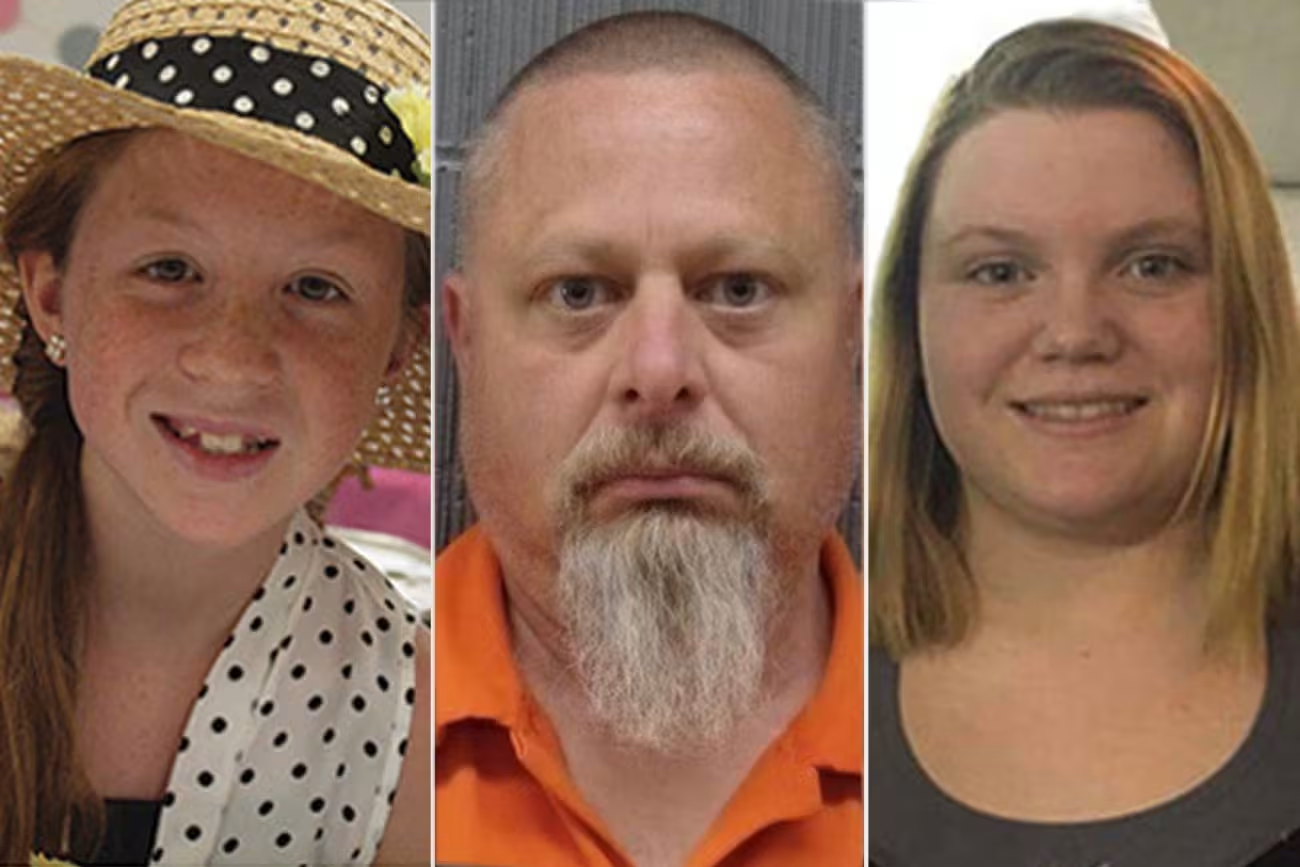
The murders of Abigail Williams, 13, and Liberty German, 14, became one of the most widely followed criminal investigations in the United States after the two teenagers disappeared during an afternoon hike in Delphi, Indiana, on February 13, 2017. Their bodies were discovered the following day in a wooded area near Deer Creek, transforming a missing-person investigation into a double-homicide case that would remain unresolved for more than five years.
The investigation attracted national attention because Liberty had recorded a short video showing a suspicious man on the Monon High Bridge shortly before the girls disappeared. The recording, which included a male voice instructing the girls to go "down the hill," became the defining piece of public evidence in the investigation.
In October 2022, authorities arrested Richard Matthew Allen, a local pharmacy technician who had acknowledged being on the hiking trail that afternoon. Prosecutors subsequently presented firearm evidence, witness testimony, cellphone recordings and multiple incriminating statements attributed to Allen.
On November 11, 2024, a jury found Allen guilty of murdering both teenagers. He received a combined sentence of 130 years in prison on December 20, 2024.
However, the case remains legally contentious. Allen's defense has challenged the reliability of his confessions, the scientific interpretation of firearm evidence, the handling of alternative suspects and the exclusion of certain defense testimony. In September 2026, the Indiana Court of Appeals heard arguments concerning his request for a new trial.
The Delphi case is therefore more than a story about two tragic murders. It is also an examination of investigative failures, forensic evidence, custodial mental health, courtroom procedure and the difficulties of securing a conviction in a complex criminal investigation.
1. The Victims: Who Were Abigail Williams and Liberty German?
Abigail Williams and Liberty German were eighth-grade students and close friends who lived in Delphi, a small community in Carroll County, Indiana.
Abigail Williams
Abigail Joyce Williams, known as Abby, was 13 years old when she was murdered.
She was remembered by relatives and friends as a cheerful teenager who enjoyed spending time with people close to her. She shared a particularly close friendship with Liberty German, and the two frequently participated in activities together.
Liberty German
Liberty Rose Lynn German, known as Libby, was 14 years old.
She was an outgoing teenager who enjoyed photography, spending time with friends and outdoor activities. Her cellphone ultimately became one of the most important sources of evidence in the investigation.
Liberty's decision to record a suspicious individual on the hiking trail provided investigators with an image and voice recording that would later become central to the prosecution's case.
Their friendship and shared plans for an ordinary afternoon made the circumstances of their deaths particularly devastating for their families and the Delphi community.
2. February 13, 2017: The Last Afternoon at Monon High Bridge
On Monday, February 13, 2017, Abby and Libby had a day off from school and decided to visit the Delphi Historic Trails.
A family member dropped them off near County Road 300 North at approximately 1:30 p.m.
Their destination included the Monon High Bridge, an abandoned railroad bridge overlooking Deer Creek.
The bridge was a popular location for local hikers, although its elevated structure and deteriorating condition made crossing it challenging.
At approximately 2:07 p.m., Libby posted a photograph of Abby walking across the bridge on social media.
It was among the last publicly documented images of the girls before their disappearance.
The Missed Pickup
The girls were expected to meet a family member later that afternoon.
When they failed to arrive at the agreed location, their relatives became concerned and began searching for them.
They were subsequently reported missing, and local authorities organized a search involving law enforcement officers and volunteers.
Search teams examined the trails, surrounding woods and areas near Deer Creek.
The investigation took a tragic turn the following morning when the girls' bodies were discovered in a wooded area.
3. Liberty German's Video: The Most Important Early Evidence
During the investigation, authorities examined Liberty's cellphone and discovered video footage recorded on the afternoon of February 13.
The recording showed a man walking in the direction of the girls along the Monon High Bridge.
The individual appeared to be wearing a blue or dark jacket, jeans and a head covering.
The footage also captured a male voice saying:
"Down the hill."
Investigators believed the man was connected to the girls' disappearance and subsequent murders.
Why the Video Became So Significant
The recording provided investigators with several important pieces of information:
- It established the presence of a suspicious man near the girls shortly before their disappearance.
- It documented the individual's approximate clothing and physical appearance.
- It preserved a voice recording that could be compared with potential suspects.
- It helped establish the sequence of events immediately before the girls were taken away from the bridge.
Authorities released portions of the recording to the public, hoping someone would recognize the individual.
The man subsequently became known in media coverage as "Bridge Guy."
Despite extensive circulation of the footage, the image quality was insufficient to produce an immediate identification.
The recording became a central part of the investigation and ultimately featured prominently in Richard Allen's trial.
4. February 14, 2017: The Discovery of the Bodies
On February 14, searchers discovered the bodies of Abby and Libby in a wooded area near Deer Creek.
Authorities confirmed that both teenagers had been murdered.
Investigators documented evidence of fatal sharp-force injuries and examined the surrounding area for physical evidence, potential weapons and traces that could identify the perpetrator.
The crime scene also contained branches positioned over or near the victims.
These unusual details subsequently attracted considerable attention because of competing interpretations concerning the offender's behavior and possible motive.
The Significance of the Crime Scene
Investigators examined the positioning of the victims, the surrounding vegetation and other physical evidence.
The defense later argued that certain characteristics of the scene supported an alternative theory involving a ritualistic killing.
Prosecutors rejected that explanation and maintained that the evidence supported their theory of an abduction followed by murder.
Importantly, the presence of branches did not independently establish a ritual or organized criminal activity.
The exact significance of these details became one of the disputed subjects during the legal proceedings.
5. The Initial Investigation: Why the Case Remained Unsolved
Following the discovery of the bodies, investigators launched a major homicide investigation involving the Carroll County Sheriff's Office and Indiana State Police.
Authorities collected physical evidence, interviewed witnesses, examined electronic records and reviewed information submitted by members of the public.
The investigation also received significant national attention because of the cellphone recording.
The First Composite Sketch
In July 2017, investigators released an initial composite sketch of a man believed to be connected to the murders.
The image was based on witness information and became part of the public effort to identify the individual.
In April 2019, Indiana State Police released another sketch depicting a younger-looking man.
Authorities instructed the public to focus on the newer image, indicating that the investigation had developed in a different direction.
The existence of multiple sketches later became relevant to Richard Allen's defense, which argued that the earlier investigative information should have received greater consideration during the trial.
The Problem of Too Many Leads
Investigators received thousands of tips from members of the public.
Some involved people who had been near the trail, while others concerned suspicious behavior, vehicles or individuals known to the local community.
As the investigation continued, authorities had to distinguish credible evidence from unverified speculation.
The case also attracted an extensive online true-crime following, which generated additional theories and allegations about potential suspects.
Managing this volume of information became a significant investigative challenge.
6. The Misfiled Investigative Tip That Changed Everything
One of the most important developments occurred when investigators revisited information collected shortly after the murders.
A volunteer file clerk, Kathy Shank, discovered an investigative lead that had been incorrectly categorized and effectively removed from active consideration.
The original information concerned a man who had contacted authorities shortly after the murders and acknowledged being on the trail on February 13, 2017.
His name had been recorded incorrectly as Richard Allen Whiteman and marked as cleared.
Shank recognized that the information might concern Richard Allen and brought the discrepancy to investigators.
This discovery prompted authorities to revisit Allen's earlier statements and examine his movements on the day of the murders.
Why the Misfiled Tip Matters
The error demonstrated how administrative problems can affect even major criminal investigations.
Allen had reportedly provided information about his presence on the trail shortly after the murders, but the incorrect entry prevented investigators from properly following up on that information at the time.
The tip was rediscovered in September 2022, leading to renewed investigative attention.
Authorities subsequently reviewed the available records, interviewed Allen and examined evidence associated with him.
The discovery ultimately contributed to his arrest.
7. Richard Allen: The Suspect Who Lived in Delphi
Richard Matthew Allen was a local resident who worked as a pharmacy technician.
He lived in Delphi with his family and had an established connection to the community.
Following the murders, Allen had acknowledged being on the Monon High Bridge trail that afternoon.
However, investigators did not arrest him until October 2022, after the previously misfiled investigative tip was rediscovered.
Allen's local background and ordinary professional life contributed to the shock surrounding his arrest.
October 26, 2022: The Arrest
Authorities arrested Richard Allen on October 26, 2022.
He was subsequently charged with the murders of Abigail Williams and Liberty German.
Allen pleaded not guilty and maintained his innocence.
The prosecution developed its case around several categories of evidence, including his presence on the trail, witness observations, an unspent firearm cartridge and statements made during his incarceration.
8. The Evidence Presented Against Richard Allen
The prosecution's case was primarily circumstantial, although it included physical evidence and statements attributed to Allen.
8.1. Liberty German's Cellphone Recording
Prosecutors argued that Allen was the man shown in Liberty's video.
They presented the recording and testimony concerning the individual's clothing, physical appearance and voice.
A state trooper testified that the voice in the recording was consistent with Allen's voice.
The defense disputed the strength of the identification, emphasizing the limitations of the recording.
8.2. The Unspent .40-Caliber Cartridge
Investigators discovered an unspent .40-caliber cartridge near the victims' bodies.
Authorities connected the cartridge to a Sig Sauer P226 handgun owned by Allen.
A firearms examiner testified that microscopic marks on the cartridge were consistent with it having been cycled through Allen's firearm.
The prosecution argued that the cartridge connected Allen's weapon to the crime scene.
The defense challenged the reliability of the toolmark examination and argued that the analysis could not establish with absolute certainty that Allen's specific handgun had cycled the cartridge.
This disagreement became one of the most important forensic issues in the trial and subsequent appeal.
8.3. Witness Testimony
Several witnesses described seeing people or vehicles near the hiking trail on February 13, 2017.
Some observations were consistent with the clothing and general appearance of the man captured in Liberty's recording.
Other testimony concerned a vehicle parked in an unusual location near the former Child Services building.
The prosecution argued that these observations supported its reconstruction of Allen's movements.
The defense emphasized that none of the witnesses definitively identified Allen as the perpetrator.
8.4. Allen's Statements About Being on the Trail
Allen had acknowledged being in the area during the relevant period.
His statements about the people he saw and his movements became important when investigators compared them with witness accounts and the cellphone evidence.
The prosecution argued that inconsistencies in his statements supported its theory.
The defense maintained that being present at a public hiking trail did not establish responsibility for the murders.
8.5. The Confessions
Prosecutors presented evidence that Allen made numerous statements admitting responsibility for the killings while incarcerated.
Some statements were made in conversations with family members, while others were reportedly communicated to prison employees and mental-health professionals.
One recorded conversation played during trial included Allen saying:
"I did it. I killed Abby and Libby."
The prosecution argued that the statements were genuine admissions and supported the other evidence.
The defense challenged their reliability, arguing that Allen's mental health had deteriorated significantly during his detention.
9. The Mental Health Controversy: Were Allen's Confessions Reliable?
One of the most contentious issues in the Delphi trial concerned Allen's psychological condition during pretrial detention.
He was held under restrictive conditions, including prolonged isolation.
His attorneys argued that the conditions caused severe psychological deterioration and contributed to psychosis.
They maintained that the confessions were not reliable because they were made during a period of serious mental instability.
The Defense's Argument
The defense presented testimony from mental-health professionals concerning Allen's psychological condition.
They described unusual behavior, emotional deterioration and statements that appeared inconsistent with reality.
The defense argued that these circumstances undermined the reliability of the confessions.
The Prosecution's Response
Prosecutors maintained that Allen's statements were voluntary and constituted meaningful admissions of responsibility.
They argued that the confessions were supported by other evidence, including his presence on the trail and the firearm evidence.
They also maintained that restrictive housing was used for institutional safety rather than as a method of extracting a confession.
Why This Issue Matters
A confession can be powerful evidence, but courts must consider whether it was voluntary and reliable.
Factors such as psychological condition, detention conditions, interrogation methods and the consistency of the statement with independently established facts can all be relevant.
The dispute over Allen's mental health became one of the principal issues in his appeal.
10. The Odinism Theory and the Alternative-Suspect Controversy
Another major controversy involved the defense's proposed explanation that the murders might have been connected to ritualistic activity.
The defense pointed to the arrangement of branches and other crime-scene characteristics and argued that investigators should have considered individuals associated with modern Odinist beliefs.
Odinism is a modern religious or ideological movement drawing inspiration from ancient Norse traditions.
The defense sought to introduce expert testimony to support its interpretation of the crime scene.
Why the Theory Was Rejected at Trial
Prosecutors argued that the proposed ritual explanation lacked sufficient evidentiary support.
Judge Frances Gull excluded the proposed expert testimony, concluding that the defense had not established an adequate basis for its admission.
The prosecution maintained that the theory would distract the jury from the evidence directly connecting Allen to the crime.
The defense disagreed and argued that excluding the evidence restricted its ability to present an alternative explanation.
The issue subsequently became part of the appellate proceedings.
It is essential to emphasize that no court established that an Odinist group committed the murders.
The theory remains an argument advanced by the defense rather than an established finding of fact.
11. The 2024 Trial: Prosecutors and Defense Present Their Cases
Richard Allen's trial began on October 18, 2024, in Carroll County, Indiana.
The proceedings attracted extensive national media attention because of the unusual evidence and the controversies surrounding the investigation.
The Prosecution's Case
Carroll County Prosecutor Nicholas McLeland argued that Allen was the man captured in Liberty's cellphone recording.
Prosecutors presented the unspent cartridge, witness testimony and Allen's statements during incarceration.
They argued that the combined evidence established a coherent sequence of events in which Allen abducted the girls from the bridge area and subsequently murdered them.
The prosecution also emphasized the repeated confessions, arguing that their consistency with other evidence supported their reliability.
The Defense's Case
Defense attorneys Bradley Rozzi and Andrew Baldwin argued that the prosecution had failed to prove Allen's guilt beyond a reasonable doubt.
They challenged the firearm analysis, questioned the reliability of the confessions and emphasized the absence of direct forensic identification.
They also argued that the investigation had not adequately explored alternative suspects.
The defense's position was that the evidence did not establish that Allen was the individual shown in Liberty's recording or that he had committed the murders.
The Jury's Verdict
After hearing the evidence and deliberating, the jury returned guilty verdicts on November 11, 2024.
Allen was convicted of two counts of murder and two counts of felony murder associated with the kidnapping of the victims.
The verdict represented the conclusion of the original criminal trial, although the defense immediately indicated that it intended to pursue an appeal.
12. December 2024: Richard Allen Receives 130 Years in Prison
On December 20, 2024, Judge Frances Gull sentenced Allen to a total of 130 years in prison.
The sentence consisted of two consecutive 65-year terms for the murder convictions.
The court imposed the maximum available sentence for each count.
Allen continued to maintain his innocence.
The sentence brought a major stage of the case to a close but did not end the legal dispute surrounding the conviction.
13. The 2026 Appeal: Richard Allen Seeks a New Trial
In September 2026, Allen's attorneys presented arguments before the Indiana Court of Appeals, seeking to overturn his convictions and obtain a new trial.
The appeal challenges several decisions made during the original proceedings.
Attorney Mark Leeman argued that the trial contained significant errors that prevented the defense from presenting its case fully and fairly.
13.1. The Search of Allen's Home
The defense questioned the validity of the search warrant used to obtain evidence from Allen's home.
Attorneys argued that the search and evidence obtained through it should be reviewed for constitutional compliance.
13.2. The Confessions and Restrictive Detention
The defense argued that statements made during Allen's incarceration should have been excluded because of the severe psychological deterioration he experienced.
The state maintained that the statements were voluntary and that restrictive housing was justified by safety concerns.
13.3. The Exclusion of Alternative-Suspect Evidence
Allen's attorneys challenged restrictions on evidence concerning alternative suspects and the proposed Odinism-related theory.
They argued that the jury should have been allowed to consider additional evidence concerning other possible explanations for the crime.
13.4. The Firearm Examination
The appeal also revisited the scientific interpretation of the unspent cartridge.
The defense argued that limitations on its proposed expert testimony prevented jurors from fully evaluating the reliability of the prosecution's firearm analysis.
13.5. The Exclusion of Audio Recordings
The defense questioned why certain audio recordings associated with prison videos were not presented to the jury.
It argued that the recordings could have provided important context for Allen's mental condition and unusual statements.
What Happens Next?
The Indiana Court of Appeals heard oral arguments on September 21, 2026.
According to reporting published after the hearing, the judges questioned both sides about the legal and evidentiary issues raised in the appeal.
As of November 6, 2026, the reviewed sources do not establish that the court has issued a final written decision.
The appeal is not a retrial. The judges must determine whether the original court made legally significant errors and whether those errors justify reversing the convictions or granting another form of relief.
Until the court grants relief, Allen's convictions and 130-year sentence remain in effect.
14. Where Is Richard Allen Now?
Following sentencing, Allen was held in Indiana correctional facilities before being transferred out of the state in July 2025.
Reports identified the Lexington Assessment and Reception Center in Oklahoma as his receiving facility.
His transfer was associated with an interstate correctional agreement between Indiana and Oklahoma.
His incarceration status and appellate proceedings should be considered separately: being transferred between correctional facilities does not alter the validity of the conviction or sentence.
15. The Impact on the Victims' Families and the Delphi Community
The murders profoundly affected the families of Abigail Williams and Liberty German.
The case also transformed Delphi into a focal point for national true-crime attention.
Thousands of people followed the investigation, discussed potential suspects and analyzed the available evidence.
Although public attention helped keep the case visible, the online speculation also created problems for people who were named or accused without sufficient evidence.
The families were forced to navigate years of uncertainty, extensive media coverage and a lengthy judicial process.
For the community, the conviction represented a major legal milestone, but the continuing appeal means that the case remains part of public discussion.
The most important consideration remains the lives of the two teenagers whose deaths initiated the investigation.
16. Complete Timeline of the Delphi Murders
| Date | Major development |
|---|---|
| February 13, 2017 | Abigail Williams and Liberty German visit the Delphi Historic Trails. |
| February 13, 2017 | Liberty records video of a suspicious man on Monon High Bridge. |
| February 13, 2017 | The girls disappear after failing to meet their family at the pickup location. |
| February 14, 2017 | Their bodies are discovered in a wooded area near Deer Creek. |
| July 2017 | Investigators release the first composite sketch. |
| April 2019 | Indiana State Police release a revised sketch. |
| September 2022 | A volunteer discovers a misfiled investigative tip concerning Richard Allen. |
| October 26, 2022 | Richard Allen is arrested. |
| October 18, 2024 | Allen's murder trial begins. |
| November 11, 2024 | The jury finds Allen guilty. |
| December 20, 2024 | Allen receives a 130-year prison sentence. |
| July 2025 | Allen is transferred to an Oklahoma correctional facility. |
| September 21, 2026 | The Indiana Court of Appeals hears arguments concerning his request for a new trial. |
| November 6, 2026 | The reviewed sources do not establish a final appellate ruling. |
Frequently Asked Questions
Who were the victims of the Delphi murders?
The victims were Abigail Joyce Williams, 13, and Liberty Rose Lynn German, 14, two close friends from Delphi, Indiana.
When did the Delphi murders happen?
The murders occurred on February 13, 2017, after the teenagers visited the Monon High Bridge hiking area. Their bodies were discovered on February 14.
Who was responsible for the Delphi murders?
Richard Matthew Allen was convicted of murdering both girls in November 2024. He received a 130-year sentence in December 2024 and continues to challenge the conviction.
What was the significance of Liberty German's video?
Her cellphone recorded a suspicious man walking on the bridge and captured the words "Down the hill." The recording became a major investigative and trial exhibit.
What evidence connected Richard Allen to the murders?
The prosecution relied on his presence at the trail, witness testimony, a cartridge associated with his handgun, the cellphone recording and multiple incriminating statements made during incarceration.
Was Richard Allen identified through DNA?
The prosecution did not present direct DNA identification linking Allen to the murders. Its case relied on the combined weight of circumstantial, firearm and confession evidence.
Why did the defense challenge the confessions?
The defense argued that Allen experienced serious psychological deterioration during restrictive incarceration, making his statements unreliable. Prosecutors maintained that the admissions were voluntary and supported by other evidence.
What is the Odinism theory?
It was an alternative-suspect theory advanced by the defense based on its interpretation of certain crime-scene characteristics. The trial court excluded the proposed expert testimony, and no court established that an Odinist group committed the murders.
How long is Richard Allen's prison sentence?
He received 130 years, consisting of two consecutive 65-year terms.
Has Richard Allen received a new trial?
Not as of November 6, 2026, according to the sources reviewed. The Indiana Court of Appeals heard arguments in September 2026, but a final decision has not been established.
Conclusion: The Delphi Murders and the Continuing Questions Surrounding Justice
The murders of Abigail Williams and Liberty German remain a deeply disturbing example of violence against two young people whose lives were taken during an ordinary afternoon outdoors.
Liberty's cellphone recording provided investigators with an important clue, but the investigation still required years of work before authorities identified and arrested Richard Allen.
The discovery of a misfiled investigative tip, the firearm examination and the statements attributed to Allen eventually became central components of the prosecution's case.
His conviction in November 2024 and subsequent 130-year sentence represented a major legal development. However, the defense's appeal has raised important questions about the treatment of forensic evidence, the reliability of confessions and the exclusion of alternative-suspect evidence.
The Indiana Court of Appeals must now determine whether the original proceedings complied with the applicable legal standards. Until a final ruling is issued, the conviction remains valid.
Ultimately, the Delphi case illustrates the complexity of modern criminal investigations. It demonstrates how a single piece of digital evidence can become critical, how investigative errors can delay justice and how the interpretation of forensic and psychological evidence can shape the outcome of a trial.
Above all, Abigail Williams and Liberty German deserve to be remembered as individuals, friends and teenagers whose futures were taken away. Their story should not be reduced to sensational crime-scene details or unverified online theories, but understood through the facts, the investigation and the continuing pursuit of justice.
```
- Log in to post comments