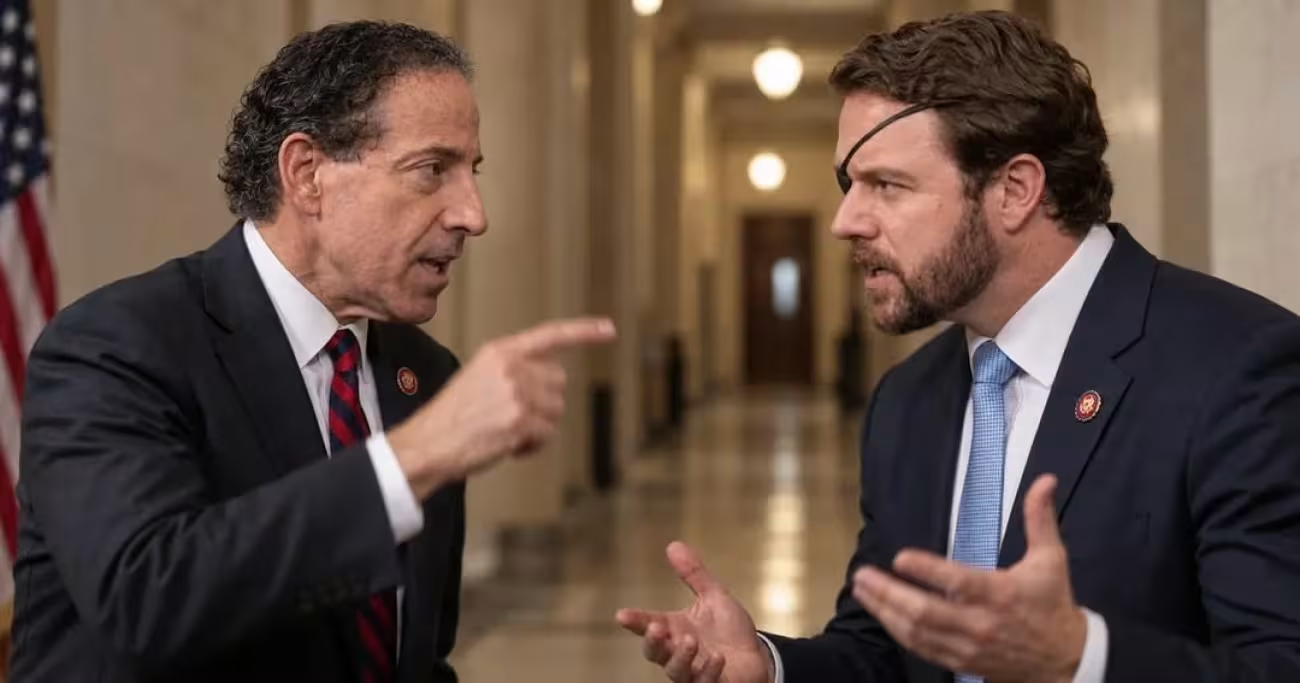
Republican Rep. Dan Crenshaw of Texas and Democratic Rep. Jamie Raskin of Maryland engaged in a heated argument on CNN on November 4, 2026, clashing over President Donald Trump, potential impeachment proceedings, insider trading legislation and the results of the U.S. midterm elections. The confrontation escalated into repeated interruptions and personal remarks as CNN anchor Dana Bash attempted to moderate the discussion.
The exchange, broadcast during CNN's post-election coverage, exposed disagreements over whether Congress should prioritize investigations of the Trump administration or pursue bipartisan legislation. It also brought attention to Crenshaw's political future after his defeat in the Republican primary earlier in 2026.
What Happened Between Dan Crenshaw and Jamie Raskin on CNN?
The confrontation began with a discussion of whether Democrats might pursue another impeachment of Trump following their gains in the November 3 midterm elections.
Crenshaw questioned whether Democrats would resist attempting to impeach the president, characterizing impeachment efforts as a recurring political activity.
Raskin responded that defending the Constitution was a congressional responsibility. He maintained that impeachment remained a constitutional option but acknowledged that it was not a comprehensive solution to political disagreements.
The debate subsequently shifted toward legislative priorities, including restrictions on stock trading and measures addressing electricity costs associated with large artificial intelligence data centers.
Crenshaw accused Democrats of delaying bipartisan legislation before the elections for political reasons. Raskin challenged that interpretation and argued that Republicans had controlled the federal government without adequately addressing concerns about the Trump administration.
Insider Trading Dispute Escalates the Argument
One of the sharpest disagreements concerned legislation intended to restrict stock trading and address potential conflicts of interest involving government officials.
Crenshaw suggested Democrats might become more willing to cooperate with Trump on legislation after the midterms.
Raskin questioned whether Trump would support meaningful restrictions on insider trading within the executive branch. Crenshaw responded that he believed the president would support such legislation.
Raskin then accused the administration of widespread insider trading, prompting Crenshaw to argue that the congressman was avoiding the substance of the legislative proposal.
The accusations made during the exchange were political claims rather than findings of criminal wrongdoing established in the discussion.
The disagreement also concerned the extent to which lawmakers should address government ethics through legislation rather than partisan confrontation.
Crenshaw Accuses Democrats of Blocking Bipartisan Legislation
Crenshaw argued that Democrats had prevented bipartisan measures from advancing in the Senate before Election Day.
He pointed to legislation addressing stock trading by lawmakers and proposals intended to prevent the costs of powering major AI data centers from being passed directly to residential electricity customers.
According to Crenshaw, these measures offered opportunities for cooperation on issues affecting public trust and household expenses.
Raskin rejected the broader suggestion that Democrats were responsible for congressional gridlock, pointing instead to Republican control of the House, Senate and White House during the preceding legislative period.
The disagreement reflected competing interpretations of legislative responsibility. Crenshaw emphasized specific bills that had stalled, while Raskin focused on the Republican Party's overall governing record.
Raskin Brings Up Republican Election Losses
As the discussion intensified, Raskin cited the midterm results as evidence that voters were dissatisfied with Republican leadership.
He accused Republicans of prioritizing support for Trump instead of passing legislation and repeatedly challenged Crenshaw's arguments about congressional cooperation.
Crenshaw criticized Raskin for interrupting him and accused the Maryland Democrat of relying on political talking points rather than engaging with specific policy proposals.
The argument became personal when Raskin referred to Crenshaw's impending departure from Congress, telling him to make his final remarks before returning to Texas.
The comment referred to Crenshaw's defeat in the March 3, 2026, Republican primary for Texas' 2nd Congressional District.
Why Is Dan Crenshaw Leaving Congress?
Dan Crenshaw, a former Navy SEAL who has represented Texas' 2nd Congressional District since January 2019, lost his bid for the Republican nomination to Texas state Rep. Steve Toth.
In the March 3 primary, Toth received approximately 55.8% of the vote, while Crenshaw received 40.7%.
The defeat followed disagreements within the Republican Party over Crenshaw's political positions, including his approach to Trump and several foreign policy issues.
Although Crenshaw remained a sitting congressman during the November CNN confrontation, he was not the Republican nominee in the November general election.
His primary defeat added context to Raskin's remarks and the personal nature of their exchange.
Could Democrats Pursue Another Trump Impeachment?
The possibility of impeaching Trump again emerged during the discussion as Democrats considered their priorities following the 2026 midterm elections.
Raskin, a former constitutional law professor and a senior Democrat on the House Judiciary Committee, previously served as the lead impeachment manager during Trump's second impeachment trial in 2021.
During the CNN exchange, he defended impeachment as a constitutional mechanism while indicating that it should not be considered the only response to concerns about presidential conduct.
Under the U.S. Constitution, the House of Representatives can approve articles of impeachment by a simple majority. Conviction and removal from office require a two-thirds vote in the Senate.
Trump was impeached twice during his first term and acquitted by the Senate in both proceedings.
The CNN debate did not establish that a new impeachment proceeding had been initiated.
How Did CNN's Dana Bash Respond?
CNN anchor Dana Bash repeatedly attempted to manage the confrontation as the lawmakers interrupted each other and raised their voices.
Despite the increasingly combative exchange, Bash observed that the discussion involved substantive disagreements over political issues and legislation.
She eventually moved the broadcast toward a commercial break as the two lawmakers continued challenging each other's arguments.
The segment attracted coverage from multiple political news outlets, including Mediaite and Breitbart, which reported the disagreement over insider trading, legislative cooperation and the midterm results.
What the Crenshaw-Raskin Debate Reveals About Congress
The confrontation illustrated the competing priorities facing Congress after the November 2026 elections.
Crenshaw argued that lawmakers should advance bipartisan measures on government ethics and energy costs rather than allow political disagreements to obstruct legislation.
Raskin emphasized congressional accountability, criticism of the Trump administration and the significance of voters' rejection of Republican candidates in several elections.
The discussion also demonstrated how lawmakers can disagree not only about specific policies but about responsibility for legislative delays and the appropriate use of congressional oversight powers.
Neither congressman announced a legislative agreement during the exchange, and no new impeachment action resulted directly from the televised confrontation.
The debate offered an early indication of the disagreements likely to shape congressional discussions over government ethics, energy affordability and executive accountability following the 2026 midterms.
```
- Log in to post comments